Bangladesh Spoon-billed Sandpiper Conservation Project (BSCP)
Key species
Spoon-billed Sandpiper | shorebirds
Location
Sonadia Island | Central Coast
Status
Active
Duration
15 Years +
Target community
Local People | NGOs | Policy | Scientists
About the project
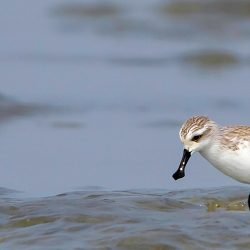
Before 2009, knowledge of the status, distribution and threats to the Critically Endangered Spoon-billed Sandpiper in Bangladesh was extremely limited. Following a survey in 2006 that recorded only eight individuals, Bangladesh was no longer considered a priority wintering country and there was no dedicated research, monitoring or conservation programme for shorebirds. The Bangladesh Spoon-billed Sandpiper Conservation Project (BSCP) was initiated in 2009 to address this gap, with the goal of conserving Spoon-billed Sandpipers and their critical wintering habitats, particularly along the Meghna Estuary and at Sonadia Island.
Through systematic winter surveys, BSCP recorded 25 Spoon-billed Sandpipers at Sonadia Island and 23 at Domar Char in March 2010 — the highest counts since 1997, demonstrating Bangladesh’s continued importance for the species. The project identified Sonadia Island as the key wintering site and Domar Char as an important passage area, while also documenting severe threats such as shorebird hunting. These findings prompted the expansion of BSCP into an integrated programme combining research, monitoring, hunting mitigation, community engagement and policy advocacy.
The problem
– limited understanding on the status, distribution and threats to Spoon-billed Sandpiper in Bangladesh
– no direct conservation intervention for SBS conservation
– coastal wetlands under development pressure
– shorebird hunting in SBS hotspots
The cause
– lack of scientific research and long-term monitoring of the species and its habitats
– no dedicated national or local conservation programs for the Spoon-billed Sandpiper
– unplanned coastal development and aquaculture causing habitat loss
– dependence on hunting and weak enforcement
The solution
– conduct targeted surveys and monitoring to improve knowledge of population, distribution and threats
– implement site-based conservation with community-led habitat protection and management
– prioritise key coastal wetlands for protection and integrate needs into coastal planning
– reduce hunting through alternative livelihood support, awareness and stronger law enforcement
Project Goal
Conserve the Critically Endangered Spoon-billed Sandpiper and its critical wintering habitats along the coast of Bangladesh through science-based, community-supported conservation action
Project Objectives
– identify and document the full extent of Spoon-billed Sandpiper wintering and passage sites in Bangladesh through systematic surveys and monitoring
– assess and address key threats at important sites, particularly shorebird hunting and habitat loss
– implement direct, site-based conservation actions, including hunting mitigation and community engagement
– strengthen collaboration with government agencies, local communities and international partners to support effective conservation
– generate scientific evidence to inform national policy, site protection, and international flyway initiatives
– build local awareness and stewardship to ensure long-term protection of coastal wetlands and migratory shorebirds
Activities
Hunting mitigation
Since September 2010, a series of surveys have been conducted to identify hunters and alternative livelihood options for them on Sonadia Island. After a solid year of background work, BSCP finally signed conservation agreements with 25 active shorebird hunters of the island between October and December 2011. Alternative livelihood options taken up include seed and fertilisers for watermelon cultivation, fishing boat, net, livestock, grocery and tailoring (sewing machine) shops. Among these alternatives, the watermelon cultivation was the most successful one. Ex-hunters who cultivated watermelons have earned almost double the amount they used to make by trapping birds.
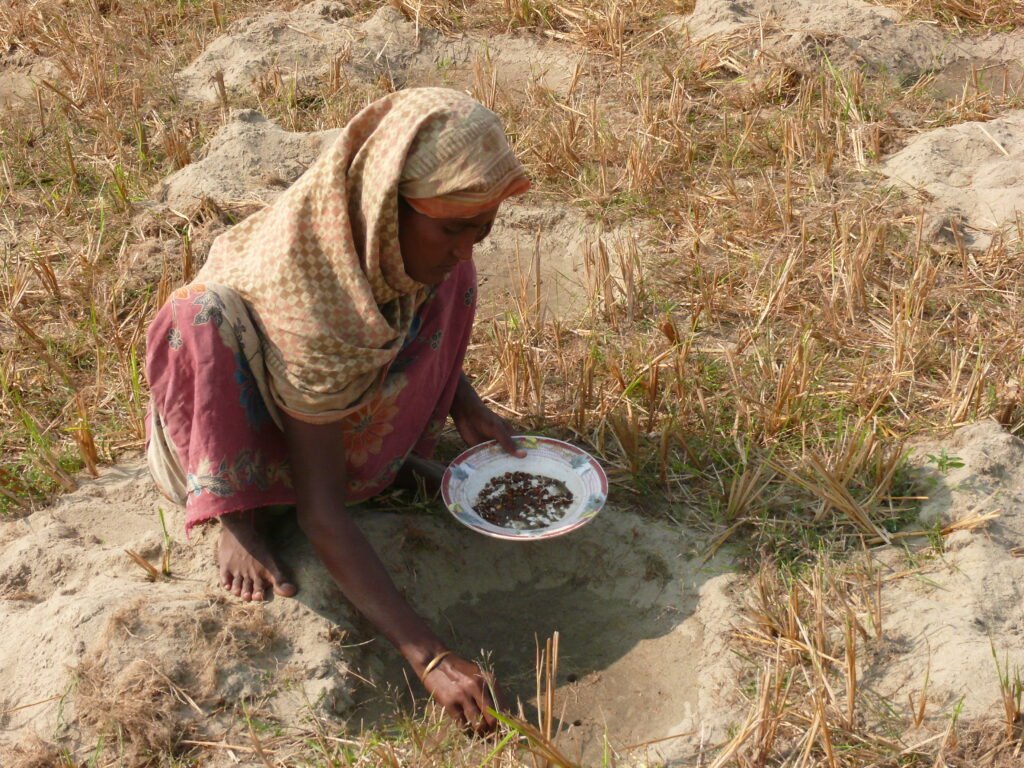
Village Conservation Groups (VCG) of the five villages on and around Sonadia Island were monitoring these activities, and ex-hunters repayed a small percentage of the income generated by the alternative livelihood to their VCG. The respective VCGs will then used this money for further hunting mitigation and shorebird conservation awareness within these villages such as building billboards, small scale campaign etc. The entire process was being monitored and guided by the Bangladesh Spoon-billed Sandpiper Conservation Project.
Finding and protecting new sites
Limited resources have prevented comprehensive shorebird surveys along the entire coastline of Bangladesh. To address this, BSCP has adopted and continues to apply a targeted, science-led approach that uses species distribution modelling and remote sensing to identify potential wintering habitats for the Spoon-billed Sandpiper before undertaking field surveys.

Using satellite imagery from the Landsat, Sentinel-2 and Google Earth, we systematically analyse coastal areas with habitat characteristics similar to known Spoon-billed Sandpiper wintering sites across the species’ range. This ongoing process has enabled the identification of previously unsurveyed areas, particularly within the Meghna Estuary that are likely to support wintering Spoon-billed Sandpipers. Subsequent ground surveys have confirmed the presence of the species, along with many other globally important waterbirds.
By continuously identifying and documenting new sites, BSCP generates the scientific evidence needed to inform conservation planning and advocate for the protection of critical coastal wetlands before they are lost to development.
Research and monitoring
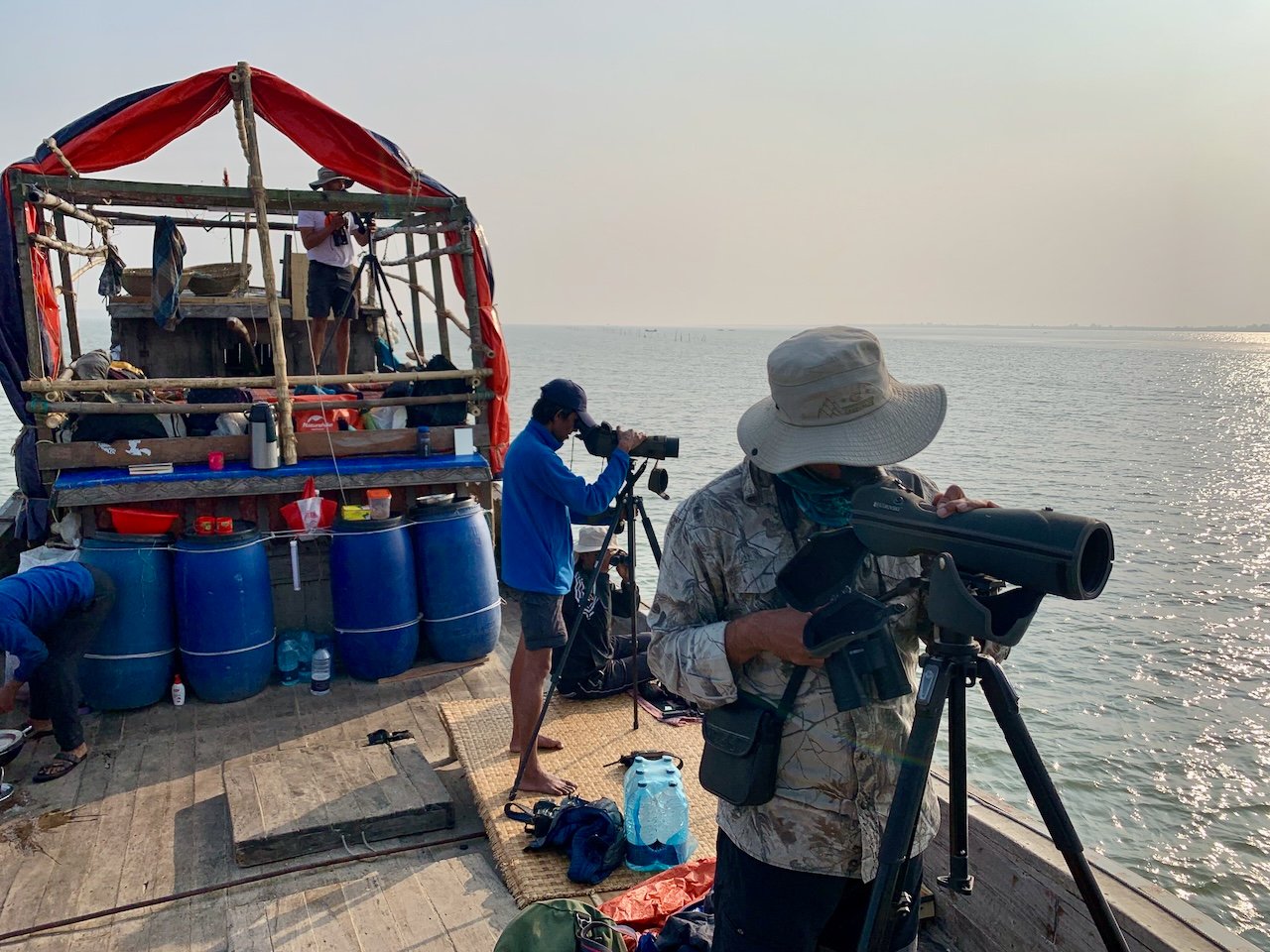
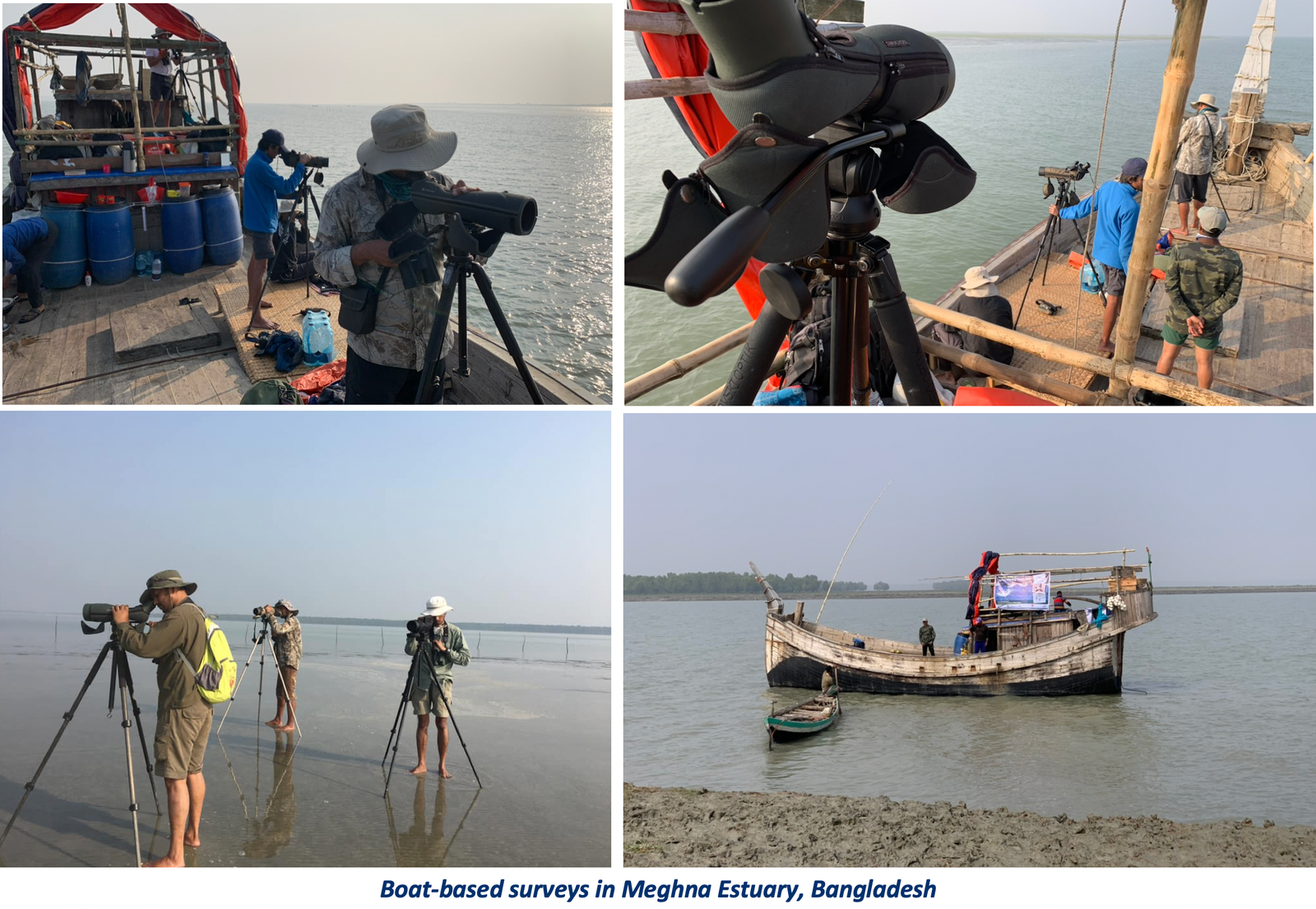
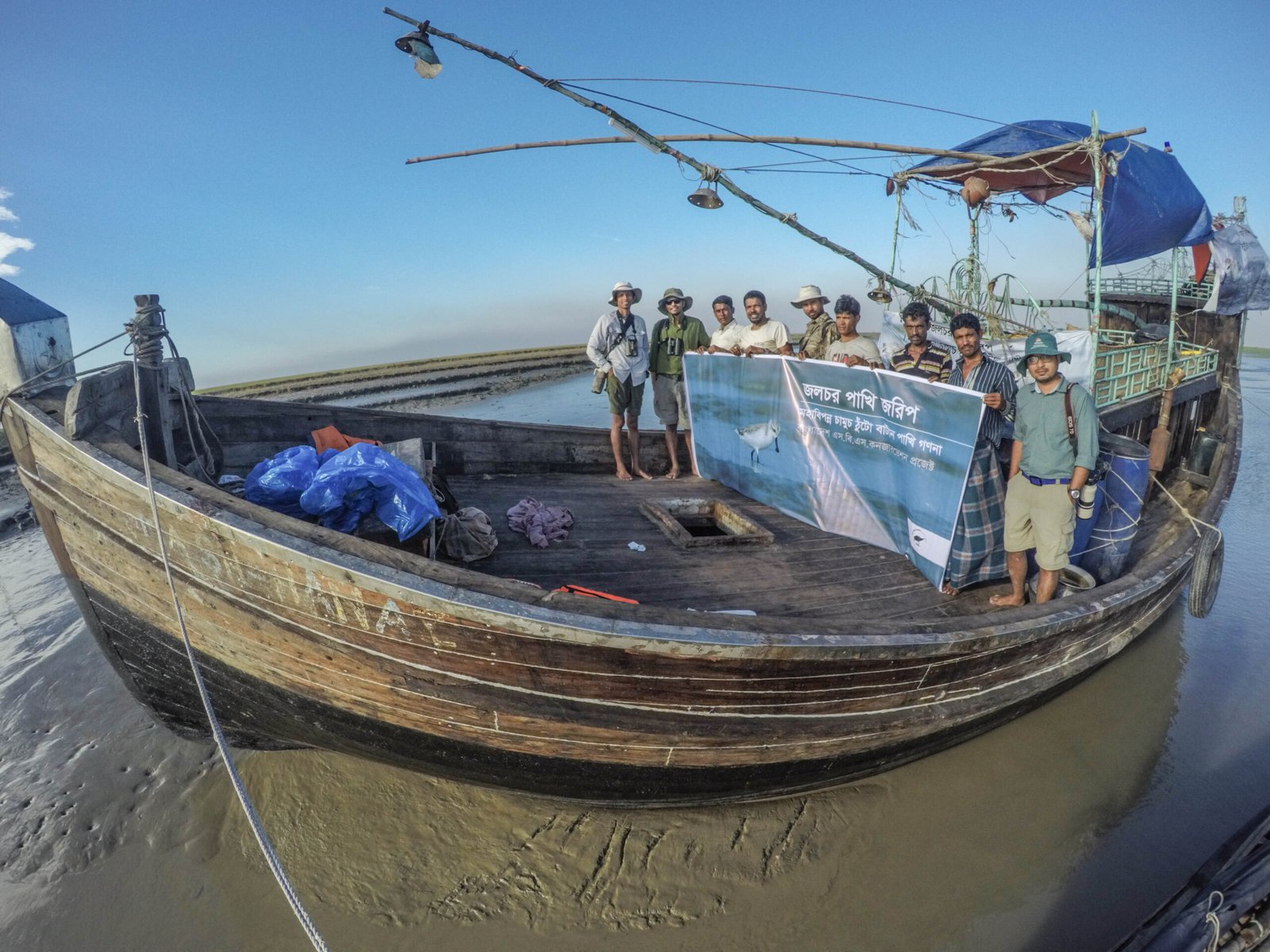
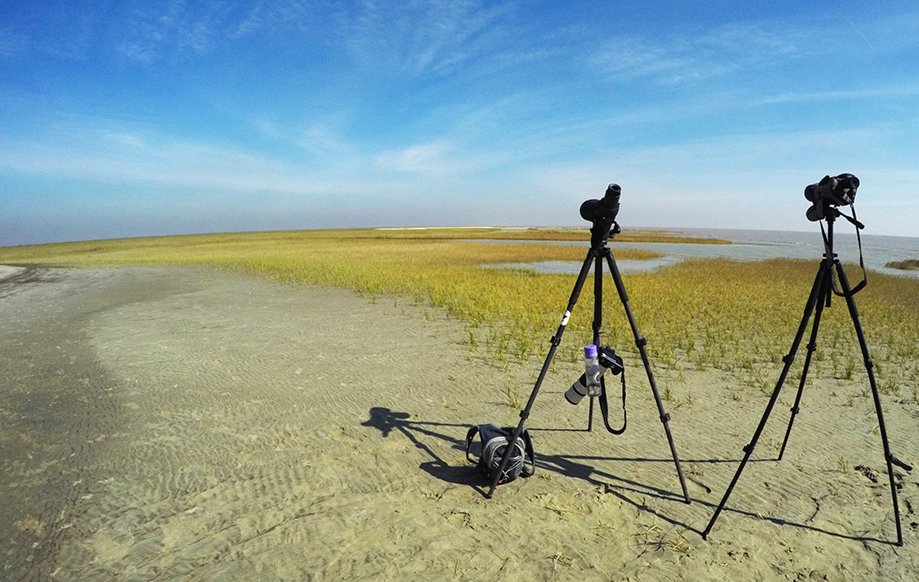
Long-term research and monitoring form the backbone of BSCP’s scientific and conservation efforts. Since 2009, we have conducted monthly shorebird surveys during every winter at Sonadia Island, Cox’s Bazar, SE Bangladesh — one of the most important wintering sites for the Critically Endangered Spoon-billed Sandpiper in the region. These consistent surveys have generated one of the longest datasets on the species anywhere in its wintering range or in South Asia, revealing population trends of all migratory shorebirds and informing urgent conservation action. In addition, BSCP conducts scan surveys at Sonadia Island targeting Spoon-billed Sandpipers to estimate closed local populations and to contribute to global population estimates using mark–resighting methods.
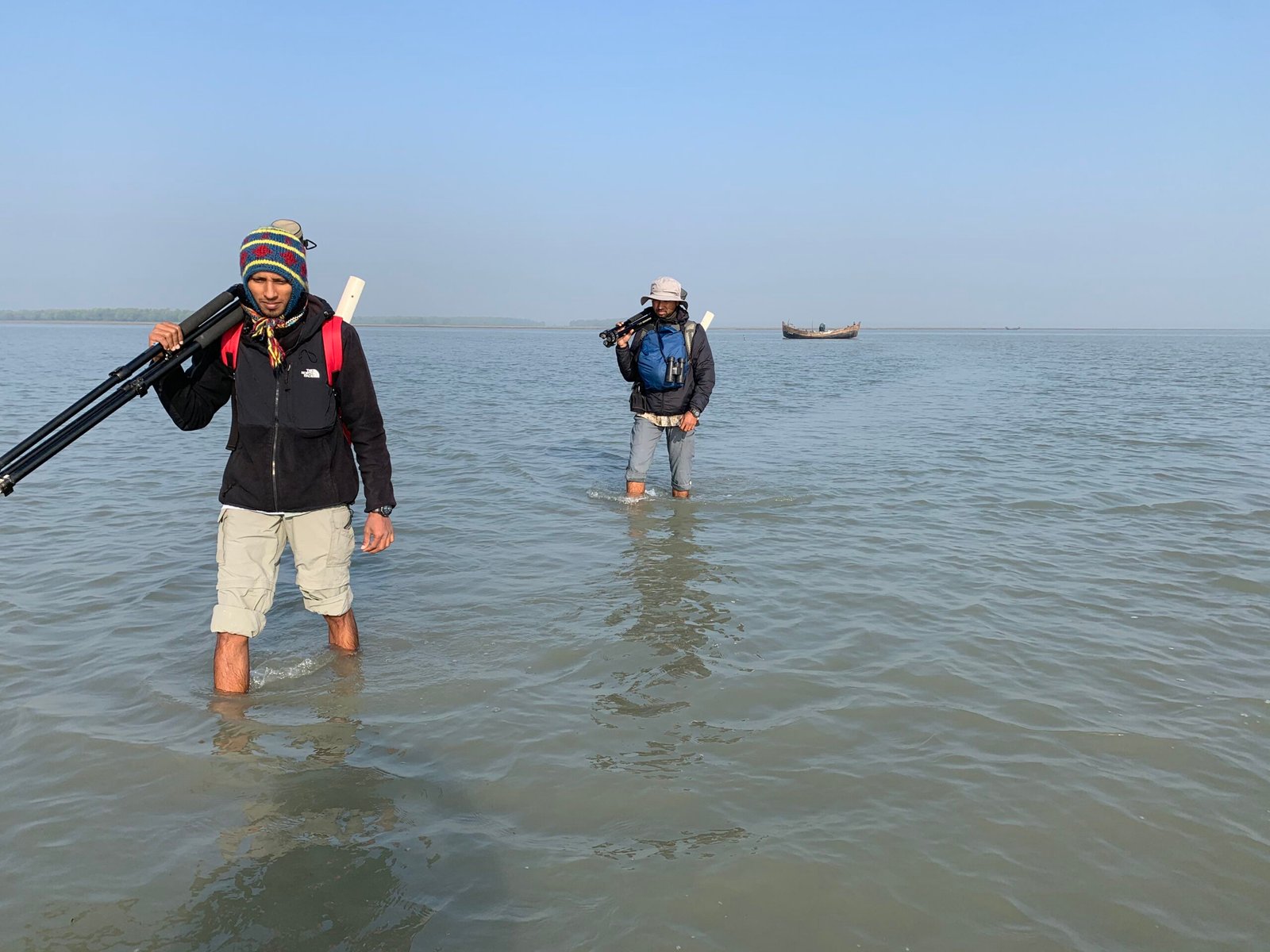
Beyond Sonadia Island, BSCP carries out regular mid-winter monitoring each January at 45–55 coastal sites across the Meghna Estuary, covering both known and newly discovered habitats. This large-scale, systematic monitoring enables us to track changes in distribution, identify emerging key sites and assess threats across Bangladesh’s dynamic coastal landscapes, ensuring that conservation decisions are guided by robust scientific evidence.
Education and outreach
Community outreach and education have been integral to BSCP since 2011, recognising that long-term conservation depends on both local support and informed decision-making. Early in the project, when large numbers of Spoon-billed Sandpipers were recorded in Bangladesh during 2010–2011, BSCP actively engaged policy makers, government agencies and the wider public through national print and digital media, helping to raise awareness of the species’ global importance and conservation urgency. In later years, this engagement has expanded through social media and online platforms, allowing conservation messages, survey results and policy-relevant findings to reach a broader national and international audience.
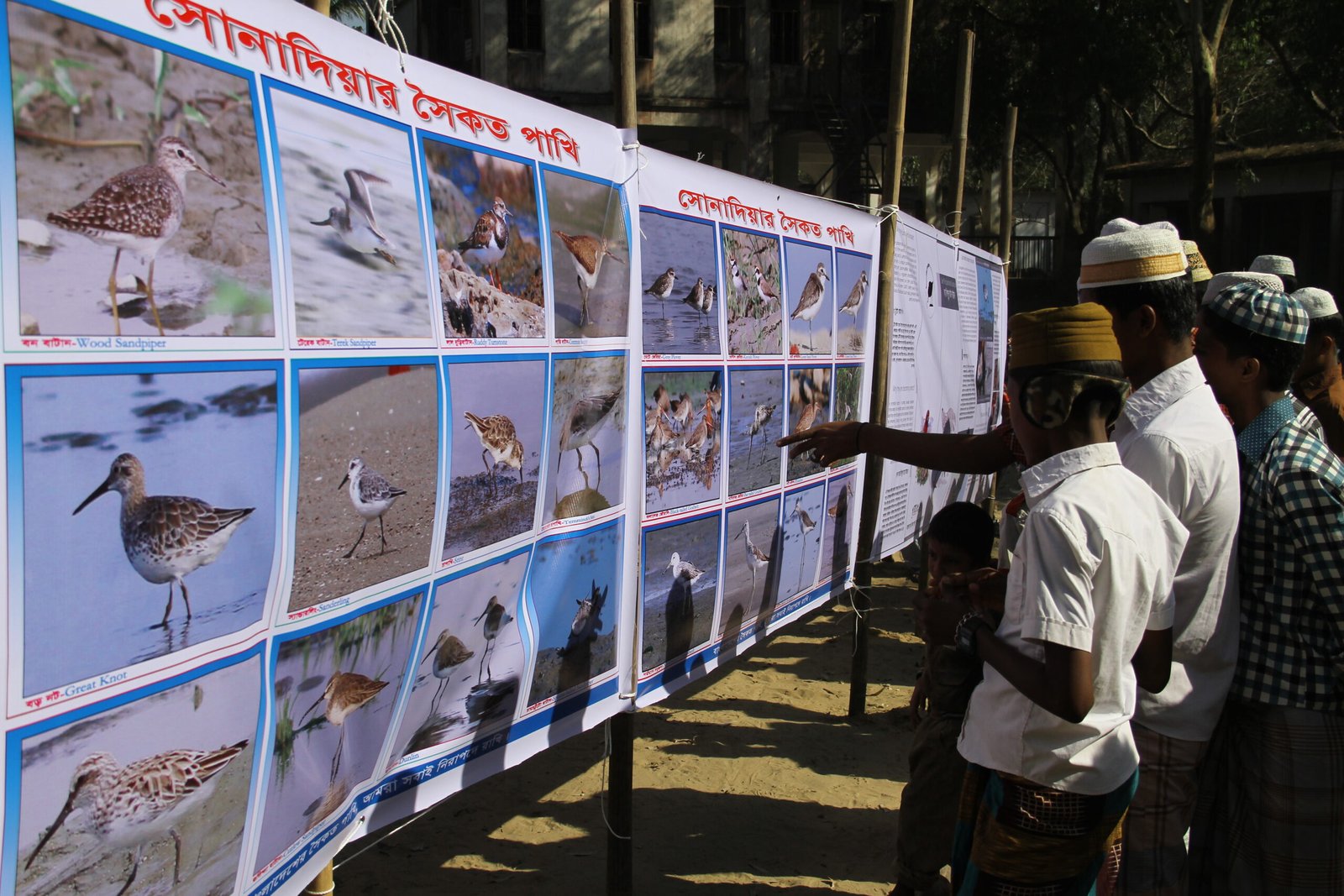
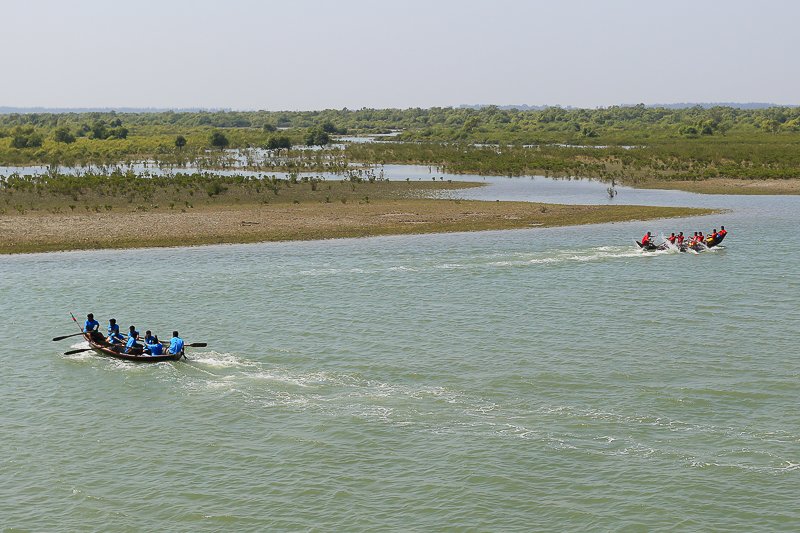
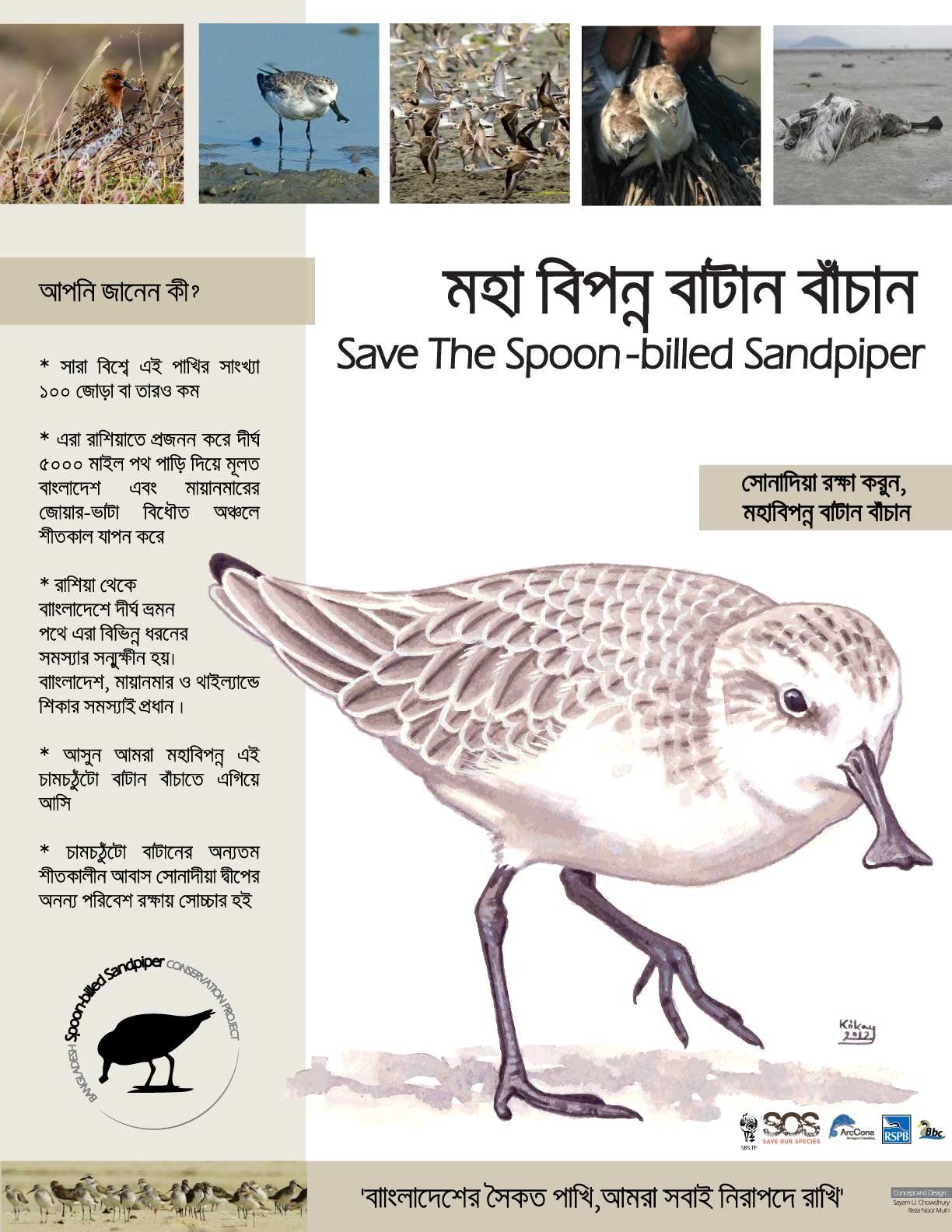
At the community level, BSCP has conducted a wide range of awareness activities on Sonadia Island and surrounding areas, including school campaigns, village meetings, folk drama, film screenings, exhibitions and public discussions focused on coastal wetlands and the Critically Endangered Spoon-billed Sandpiper. A major year-long awareness campaign launched in 2012 reached more than 1,000 community members and engaged local government and Forest Department officials, leading to commitments to avoid mangrove plantation on key shorebird habitats. BSCP regularly observes World Migratory Bird Day, expanding outreach to local schools and reaching over 300 students annually through talks, art activities and conservation messages delivered by former hunters. To reinforce awareness, thousands of posters, leaflets, and calendars have been distributed across villages, markets and public spaces. Since 2015, BSCP has further innovated outreach by organising a biennial community boat race, reviving traditional folk culture to promote shorebird conservation and strengthening local ownership through celebration and pride.
Outcomes
Hunting mitigation
In order to evaluate the effectiveness of the hunting mitigation scheme and awareness programs
(2009–2016), a semi-structured questionnaire survey was conducted in December 2016 in and around Sonadia Island by an independent consultant. A total of 46 villagers and 17 ex-hunters were individually interviewed in and around Sonadia. All the respondents said there is no more hunting in the key shorebird sites of Sonadia Island. According to the survey responses, hunting stopped around five years ago (2011). The main reasons given for ending hunting were mitigation measures by BSCP and others, strict laws and regulations, education and higher profitability of alternative occupations. BSCP and other groups operating in the area continue to monitor hunting situation through regular patrolling by local assistants and monitoring during surveys.
Finding and protecting new sites
BSCP’s systematic surveys beyond Sonadia Island have led to the discovery and recognition of new internationally important sites for the Spoon-billed Sandpiper and other migratory shorebirds. Surveys conducted in previously unsurveyed areas, including the Sundarbans (2012) and the Sandwip region, Chattogram (2015–2018), recorded over 35,000 shorebirds of 24 species, including 48 Spoon-billed Sandpipers. The Sandwip area, comprising Jahajja Char, Ganguirar Char and Bhashan/Thengar Char is now recognised to be a hotspot for migratory shorebirds.
As a direct outcome of this work, Ganguirar Char was designated as a Flyway Network Site (FNS) during the 10th Meeting of Partners (MoP 10) of the East Asian–Australasian Flyway Partnership (EAAFP), strengthening both national and international recognition of the site’s conservation value. The designation followed a clear science-to-policy pathway:
2015–2016: site identified using species distribution modelling, followed by rigorous field surveys in collaboration with the Bangladesh Forest Department
2017: findings published in Bird Conservation International
2018: endorsed by the Bangladesh Forest Department and formally designated as a Flyway Network Site
The Flyway Network Site certificate was received by the Bangladesh Forest Department at MoP 10 in 2018, marking a significant policy outcome shaped by scientific evidence. Further monitoring is ongoing to refine understanding of site use and population dynamics, and formal proposals have been submitted to government authorities to secure protection for additional key sites identified through this work.
In parallel, BSCP’s advocacy and scientific evidence contributed to Sonadia Island being recognised as an Important Bird Area (IBA) in 2013. Coverage by national, international media and conservation organisations helped elevate the site’s profile, reinforcing BSCP’s ongoing efforts to safeguard Sonadia Island against large-scale development threats, including the proposed deep-sea port.
Research and monitoring
BSCP’s long-term research and monitoring have produced a substantial body of peer-reviewed science that underpins national and international conservation action for the Spoon-billed Sandpiper and other threatened shorebirds.
𓅣 Accelerating decline of an important wintering population of the critically endangered Spoon‑billed Sandpiper Calidris pygmaea at Sonadia Island, Bangladesh | Journal of Ornithology 163 (2022): 891–901.
𓅣 Discovery of an important wintering site of the Critically Endangered Spoon-billed Sandpiper Calidris pygmaea in the Meghna Estuary, Bangladesh | Bird Conservation International 28 (2018): 251–262.
𓅣 Globally threatened shorebirds of Nijhum Dwip National Park and management implications | Wader Study 127 (2020): 244–251.
𓅣 A five-year study of over-summering shorebirds on Sonadia Island, Cox’s Bazar district, Bangladesh | Forktail 33 (2017): 120–123.
𓅣 Seasonal occurrence and site use by shorebirds at Sonadia Island, Cox’s Bazar, Bangladesh | Wader Study 118-2 (2011): 77–81.
𓅣 A survey of the Critically Endangered Spoon-billed Sandpiper Eurynorhynchus pygmeus in Bangladesh and key future research and conservation recommendations | Forktail 26 (2010): 1–8.
𓅣 Preliminary survey of shorebird hunting in five villages around Sonadia Island, Cox’s Bazar, Bangladesh | BirdingASIA 14 (2010): 101–102.
𓅣 A survey of shorebirds in the Sundarbans of Bangladesh | Stilt 66 (2014): 10–13.
Education and outreach
BSCP’s long-term outreach and education efforts have resulted in increased awareness, positive behaviour change and strengthened stakeholder support for Spoon-billed Sandpiper and coastal wetland conservation. School-based programmes and World Migratory Bird Day activities on Sonadia Island have engaged more than 200–300 students annually, fostering intergenerational learning through the active involvement of teachers and former hunters as conservation ambassadors. Creative activities, including art and animation, have helped build local pride and a sense of ownership of conservation messages among young people.
At the community level, the widespread and regular distribution of over 2,500 posters and calendars across Sonadia and Moheshkhali Islands has ensured long-term visibility of conservation messages in homes, markets, schools and government offices, embedding shorebird conservation into everyday life. Engagement with policy makers and the wider public initially through national print and digital media during 2010–2011, and later through social media platforms has elevated the national profile of the Spoon-billed Sandpiper and improved understanding of the importance of coastal wetlands among decision-makers.
Since 2015, the biennial community boat race has further strengthened outreach outcomes by embedding conservation messages within local cultural traditions. Attracting around 1500–2,000 participants and spectators per event, the race has transformed shorebird conservation into a source of celebration and community pride, strengthened local ownership, and reinforced broad-based local support for BSCP’s conservation initiatives.
Meet the Team
Dr. Sayam U. Chowdhury
Principal Investigator
Mohammod Foysal
Co-investigator [Research]
Nazim Uddin Khan
Co-investigator [Conservation]
Azizul Haque
Local Assistant
Dr. Christoph Zöeckler
Advisor [Conservation]
Professor Rhys Green
Advisor [Research]
Shimanto Dipu
Advisor [Policy]
Dr. Ding Li Yong
Advisor [Flyway]
Paul Insua-Cao
Advisor [Grants]
Image Library
Our Partners and Donors
Saving the Spoon-billed Sandpiper in Bangladesh means saving thousands of other migratory shorebirds, their habitats and local communities that depend on these coastal wetlands