
A new study by the University of Cambridge and SCOPE Foundation has highlighted major differences in the population trends of migratory shorebirds wintering in Bangladesh, with species dependent on coastal stopover habitats showing the steepest declines.
Published in Proceedings of the Royal Society B, the study used long-term shorebird monitoring data from Sonadia Island, one of Bangladesh’s most important sites for migratory shorebirds. The population trend analysis was based on 14 years of standardised survey data, combined with satellite tracking information from birds tagged in Bangladesh and data from other studies across Asia. The research focused on 20 shorebird species that use Bangladesh during the non-breeding season.
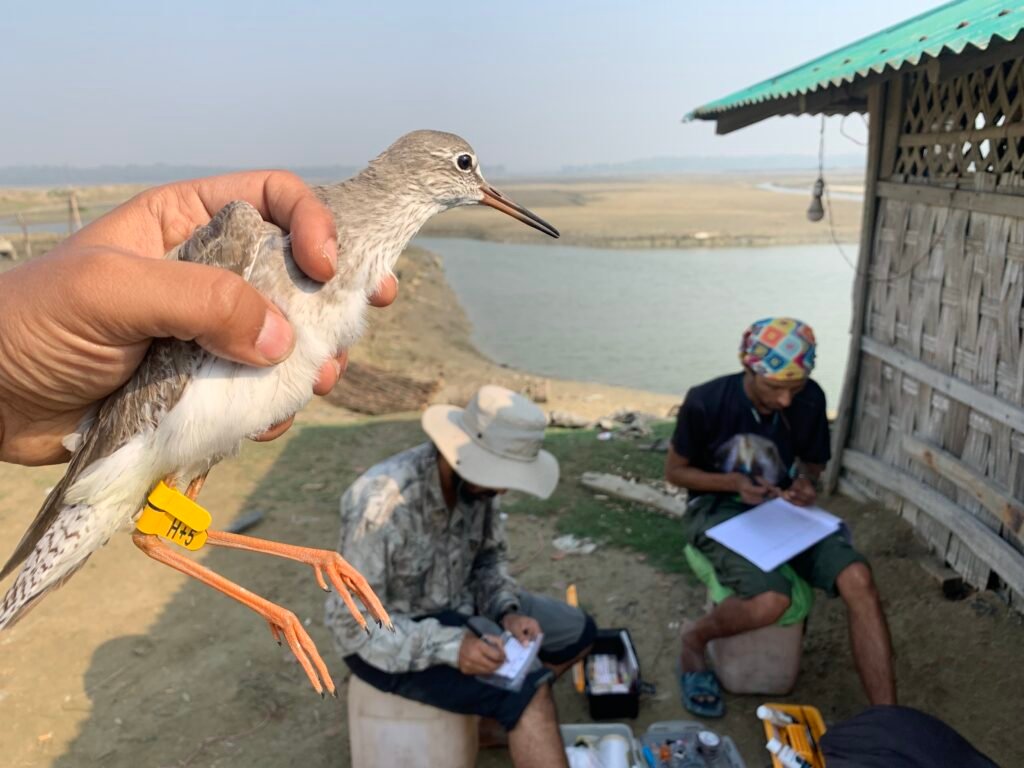
The study found that 12 of the 20 species declined between 2009 and 2023. Coastal-obligate species, which depend mainly on coastal wetlands and intertidal mudflats during migration, showed the most serious decreases. These included several globally threatened species such as the Critically Endangered Spoon-billed Sandpiper, Endangered Great Knot and Endangered Nordmann’s Greenshank.
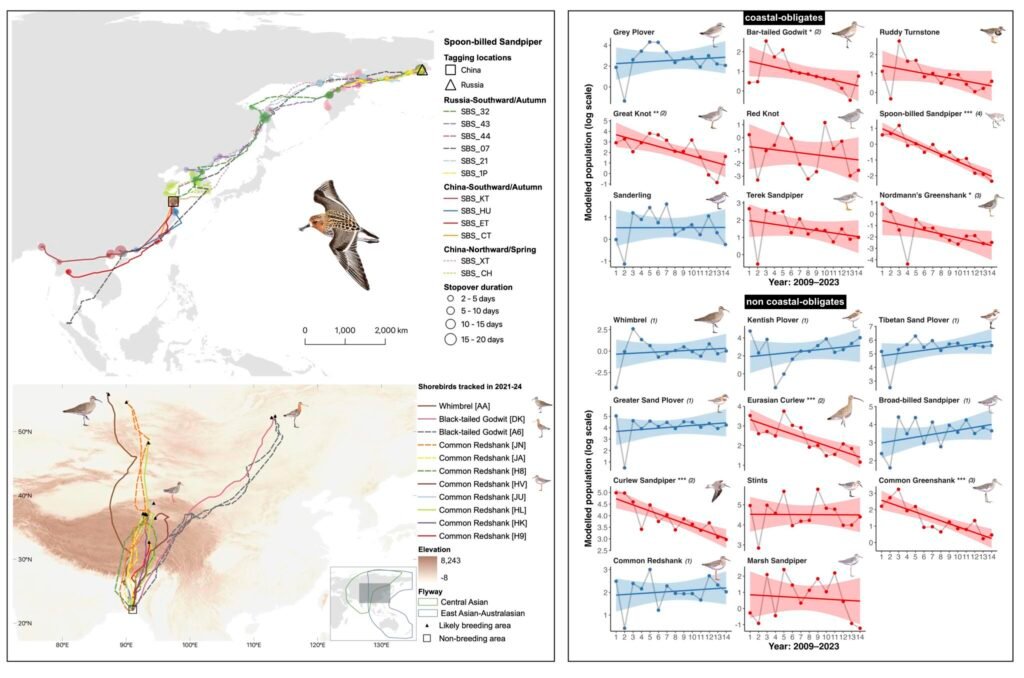
The findings show that the type of habitat used during migration was the strongest predictor of population trends. Species that follow coastal migration routes were more likely to be declining than species that also use inland stopover habitats. This pattern reflects the severe pressure facing coastal wetlands across Asia, including habitat loss, land reclamation, aquaculture expansion, hunting, bycatch and disturbance.
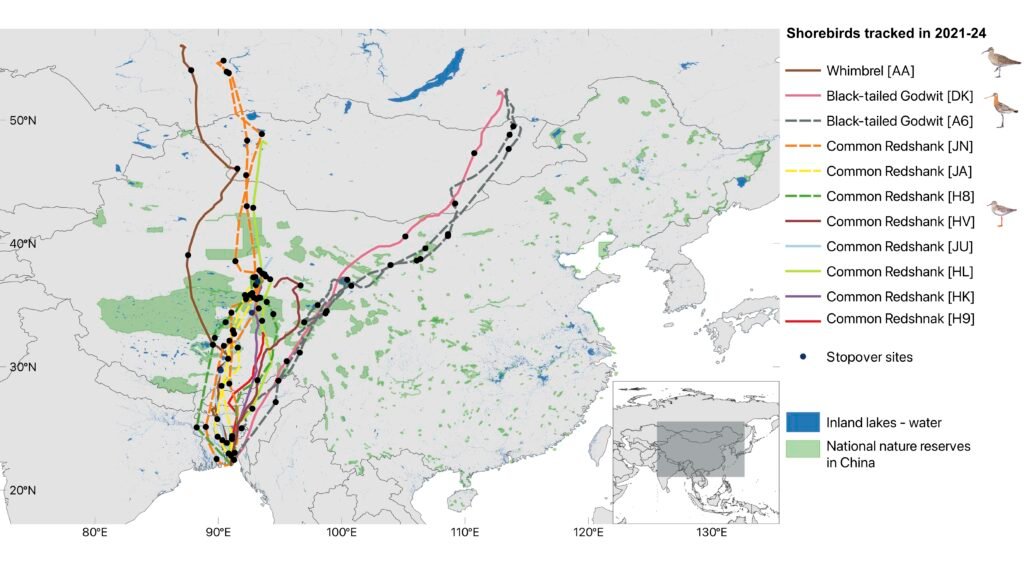
At the same time, the study also draws attention to the importance of inland wetlands, especially stopover sites on the Qinghai–Tibet Plateau used by shorebirds migrating between Bangladesh and their breeding grounds. Tracking data showed that many of these inland sites remain poorly monitored and insufficiently protected, with 64% of identified stopover locations used by tracked birds falling outside protected areas.
The results highlight that conserving Asia’s migratory shorebirds will require action across the full flyway. Protecting coastal wetlands remains essential, particularly for species such as the Spoon-billed Sandpiper, Great Knot and Nordmann’s Greenshank. However, the study also shows that inland wetlands must receive greater conservation attention before similar declines become more widespread among species using these routes.
Bangladesh plays a critical role in this wider flyway system, as it lies at the intersection of the Central Asian and East Asian–Australasian Flyways. Long-term monitoring at sites such as Sonadia Island provides important evidence for understanding population change and identifying conservation priorities across countries.
SCOPE Foundation has been working since 2009 to conserve migratory shorebirds and their habitats in Bangladesh through research, monitoring, community engagement and site-based conservation action. This study reinforces the importance of long-term fieldwork in Bangladesh and international collaboration for protecting migratory birds that depend on multiple countries and habitats throughout their annual cycle.
𓅣 Interspecific variation in shorebird population trends in relation to migration stopover habitat | Proceedings of the Royal Society B: Biological Sciences 293 (2026): 2071.
Authors: Sayam U. Chowdhury, Mohammod Foysal, Nazim Uddin Khan, Chi-Yeung Choi, Wangwang Qiu, Daniel J. Field, Nigel Clark, Rhys E. Green and Andrew Balmford.