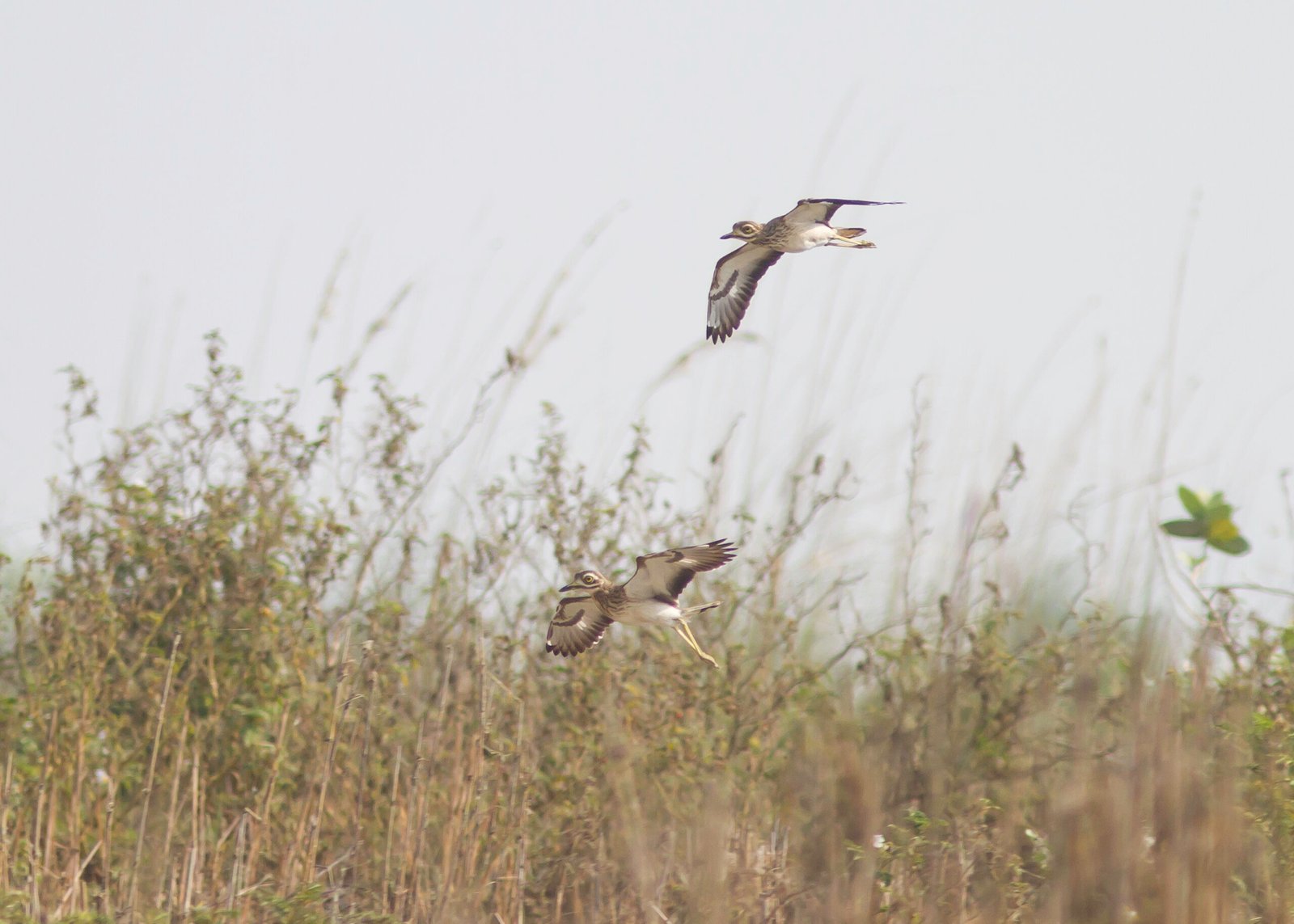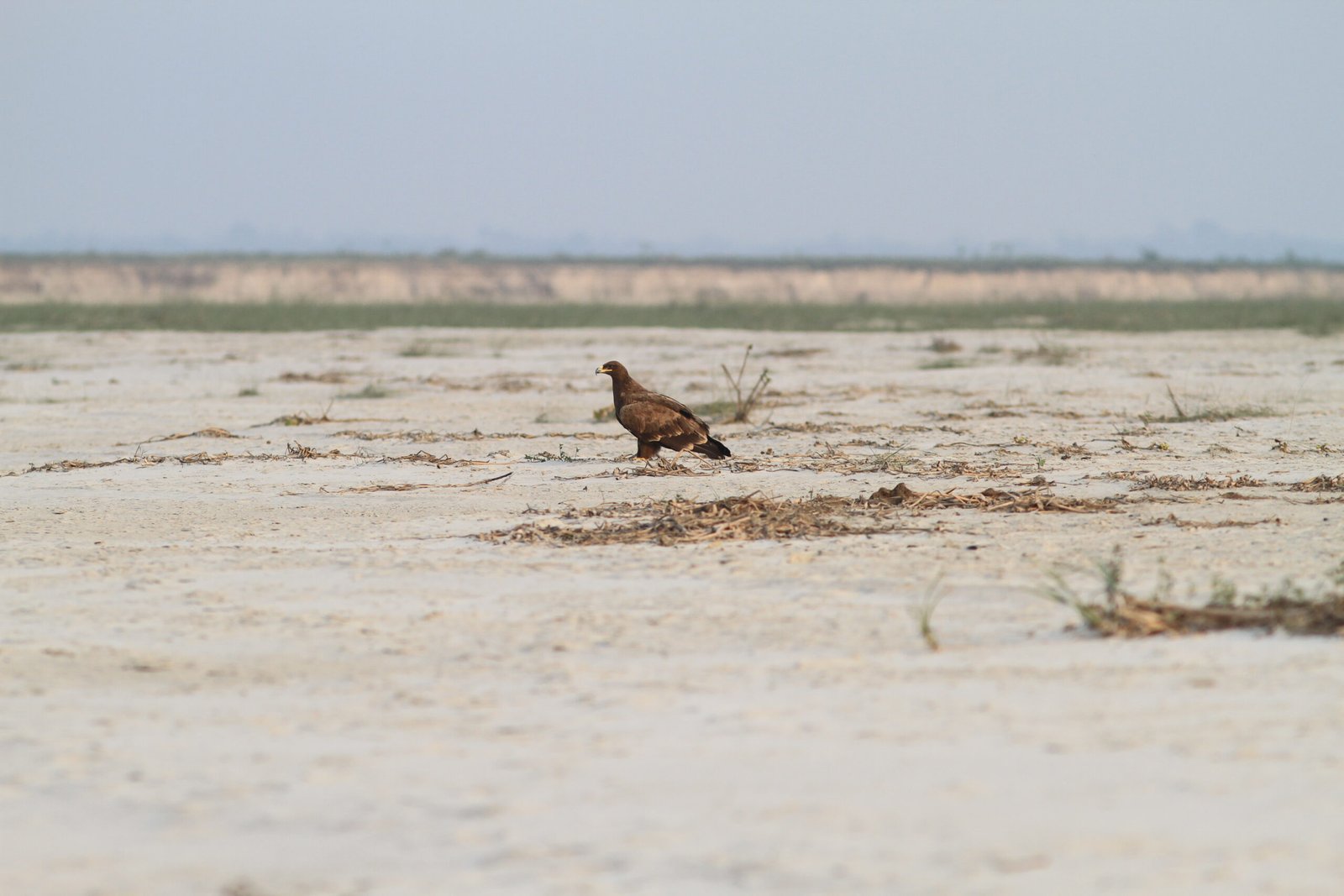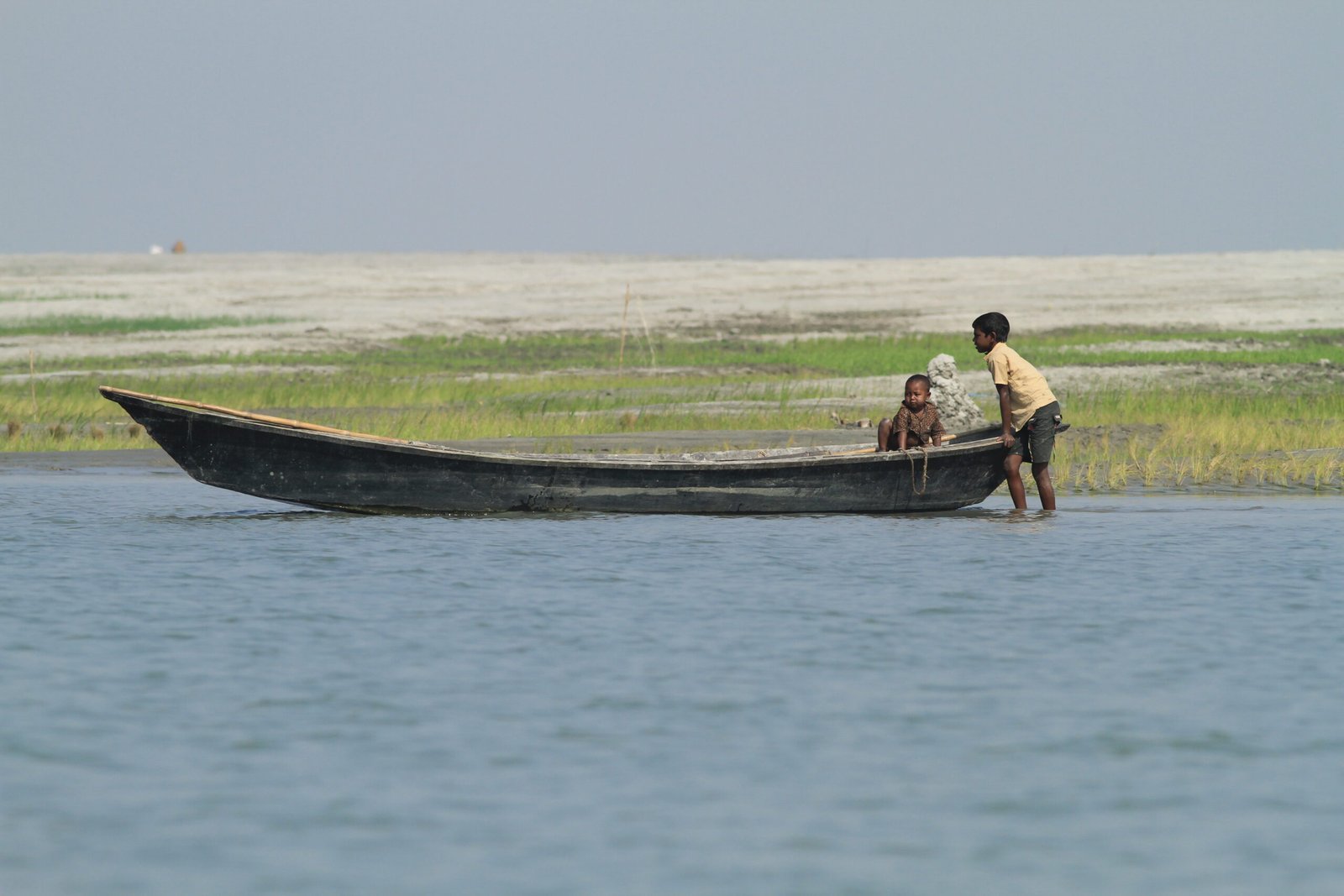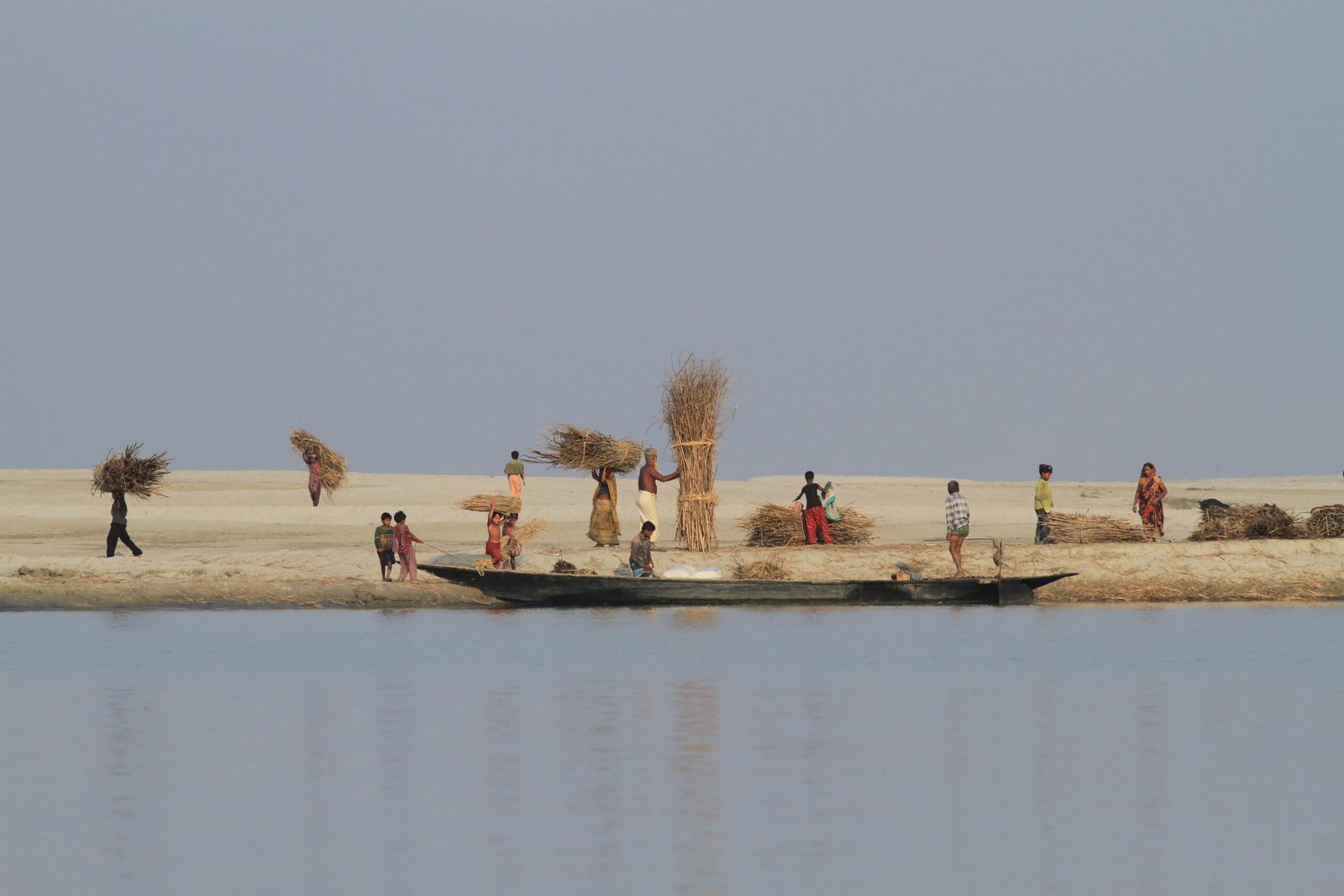
Project Goal
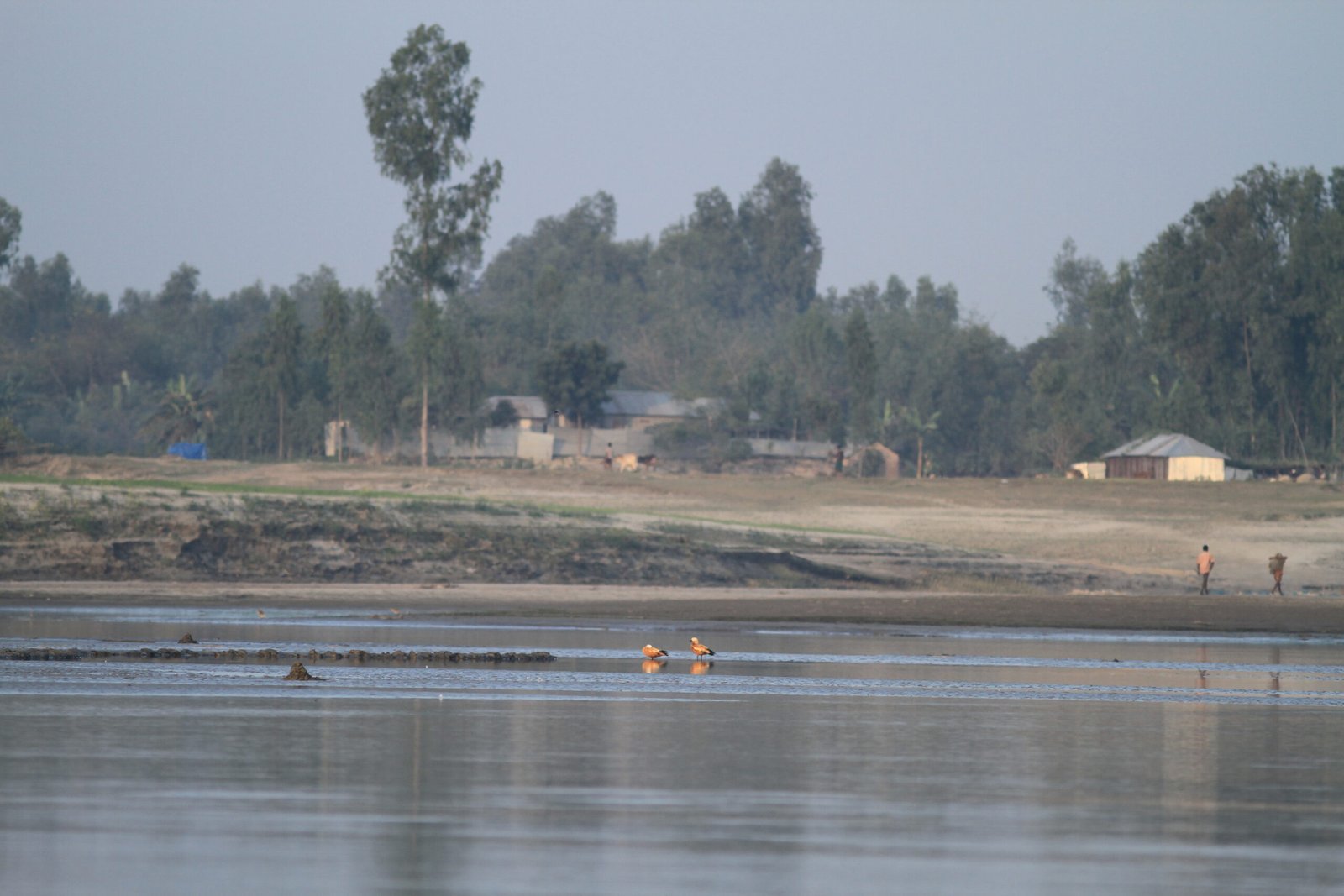
To identify, document and promote the protection of nationally and globally important riverine waterbird and grassland habitats in Bangladesh.
Project Objectives
– survey major river systems to locate breeding colonies, congregation sites and priority grasslands
– assess ecological characteristics and site-level threats
– provide scientific justification for protected area designation

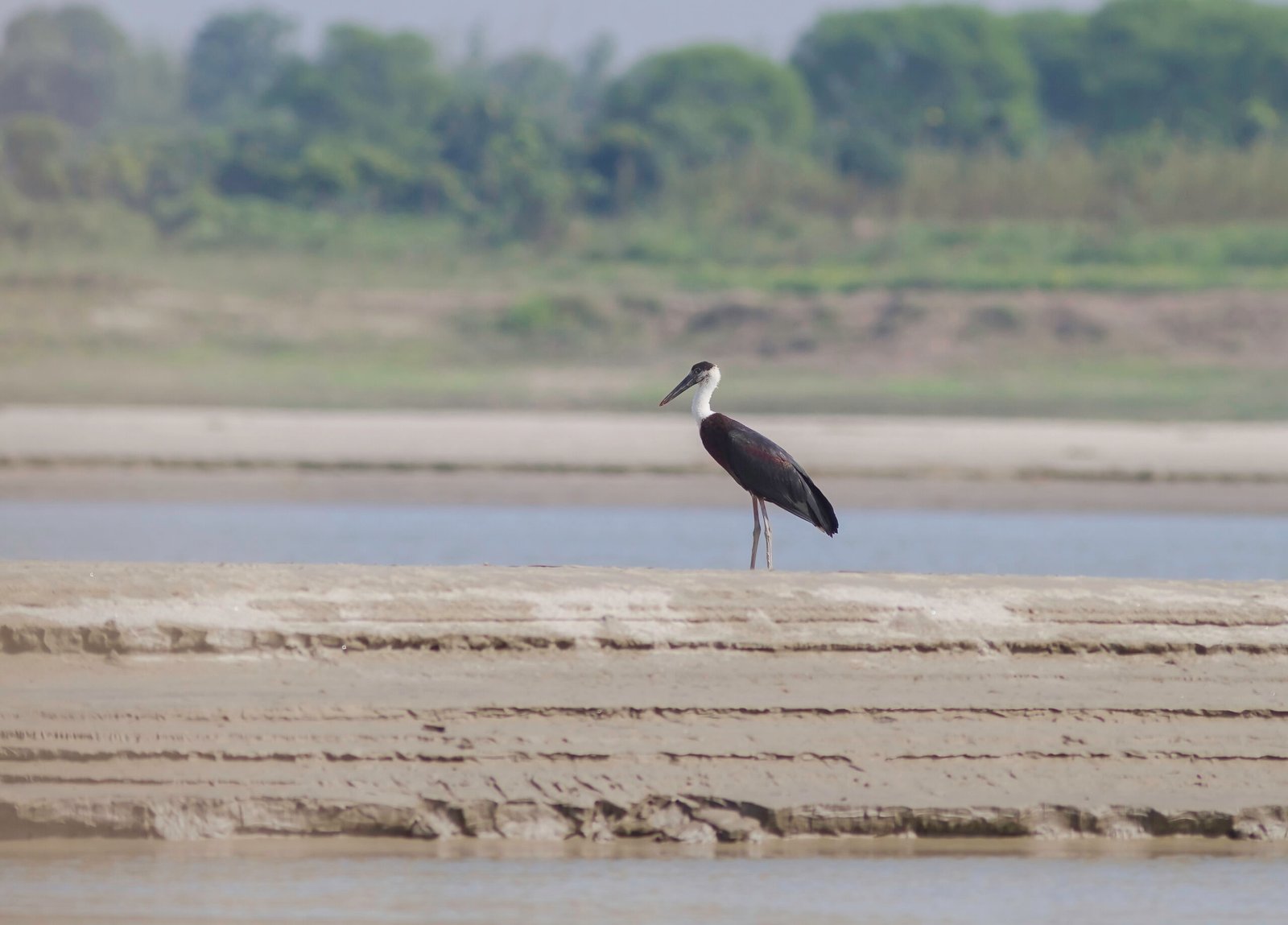
Systematic surveys are conducted along major river channels and adjacent floodplain grasslands to document breeding colonies, roosting sites and grassland-dependent species. Standardised counts and distance sampling methods are used to estimate population size, particularly for grassland specialists such as Bristled Grassbird. Habitat variables, including vegetation structure and disturbance intensity, are recorded to understand species – habitat associations.
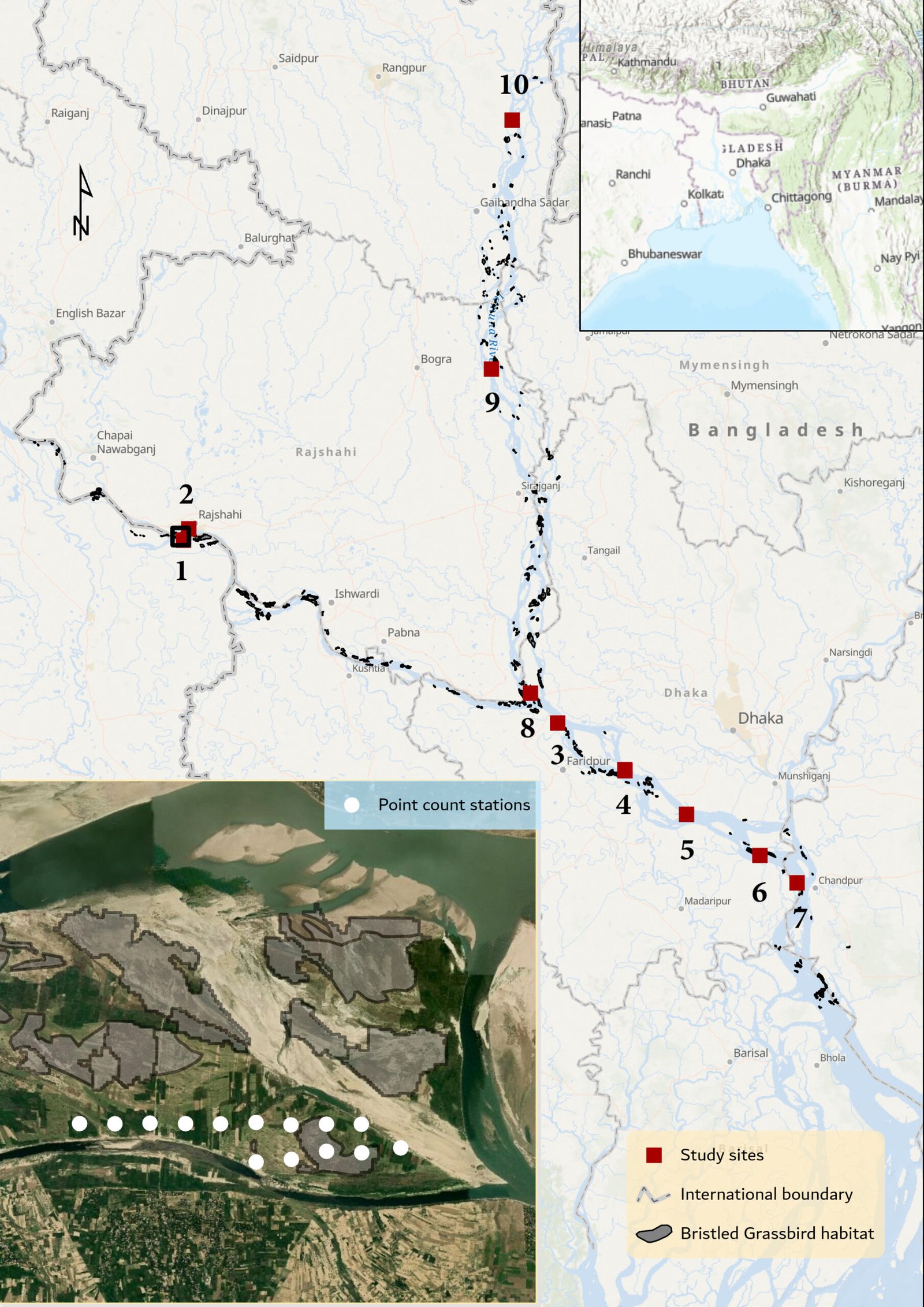
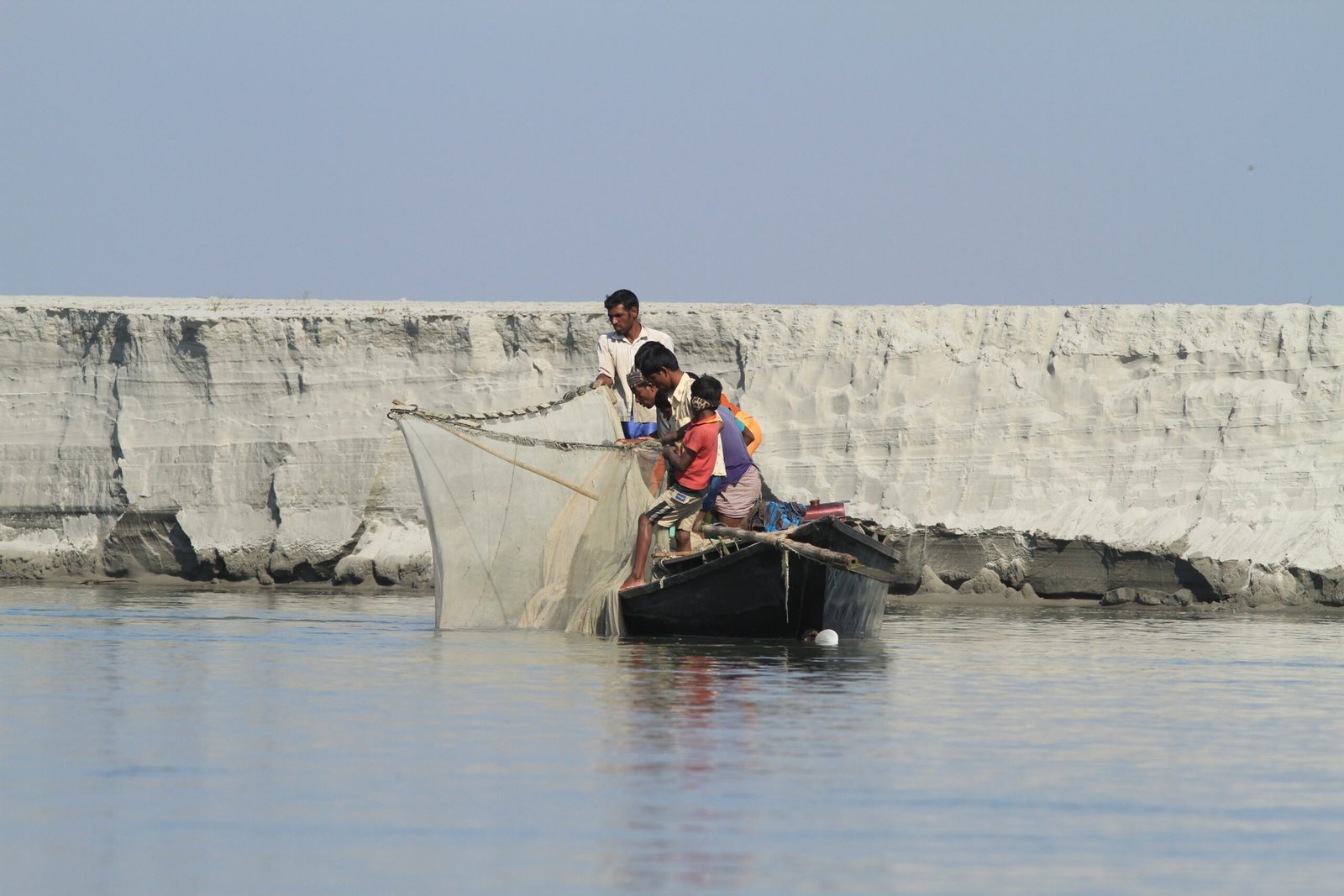
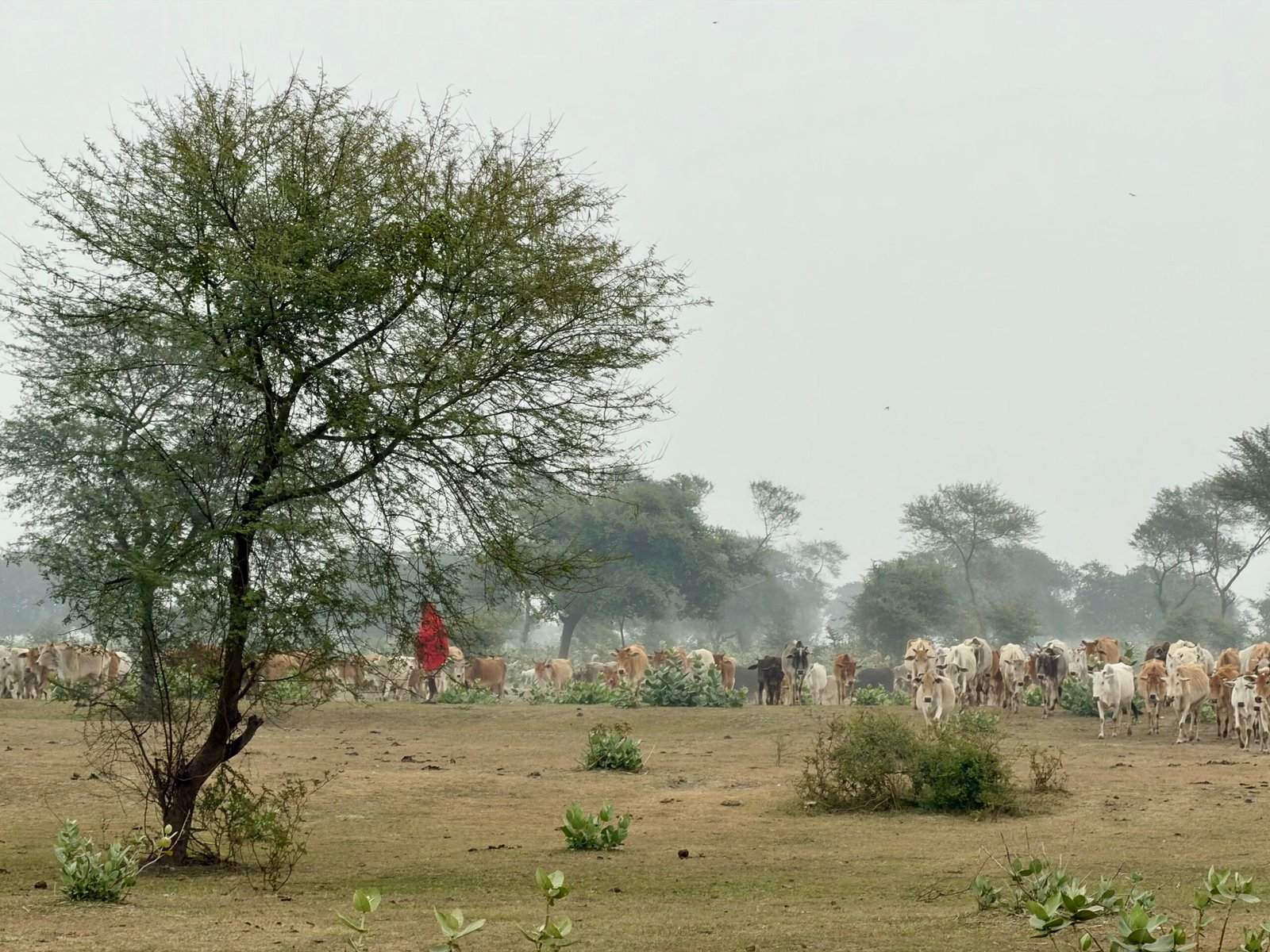
Remote sensing and spatial analysis are used to map sandbars, river channels and Saccharum-dominated grasslands, identify newly emerged habitats, and delineate ecologically significant landscapes. Site-specific threats such as grazing, sand extraction, cultivation and human disturbance are assessed. Scientific findings and maps are then compiled into formal proposals for submission to relevant authorities to support protected area designation.
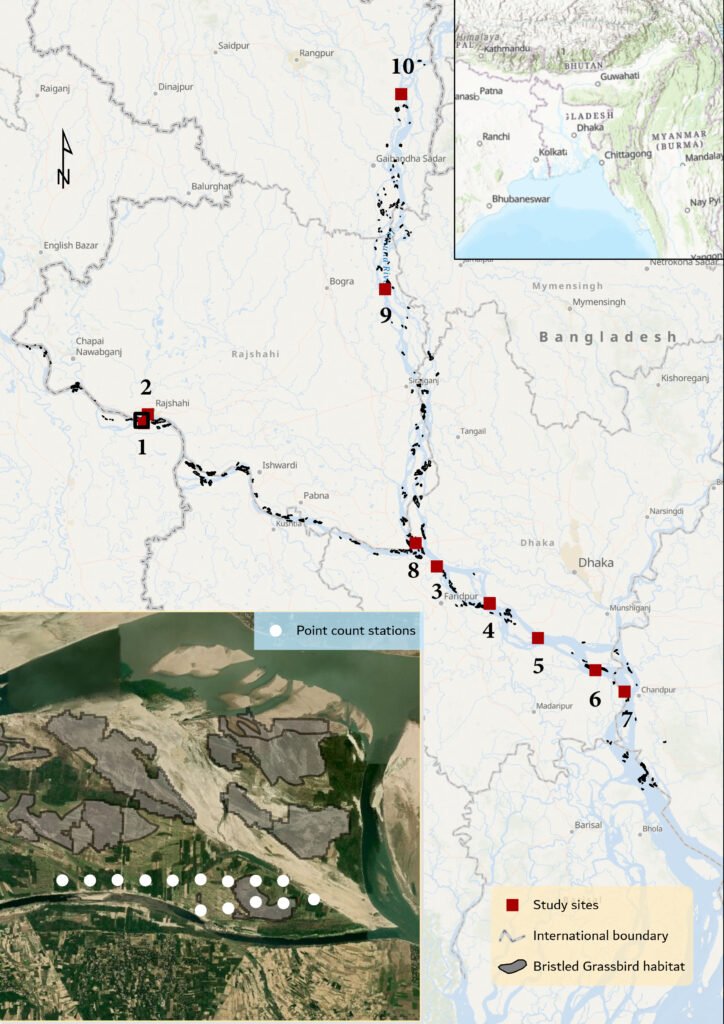
Projected potential distribution (black areas) of Bristled Grassbird in the Padma and Jamuna river systems in Bangladesh based on habitat suitability model (ISO Cluster classification), study sites (red squares) and point count stations of site 1 (white circles).
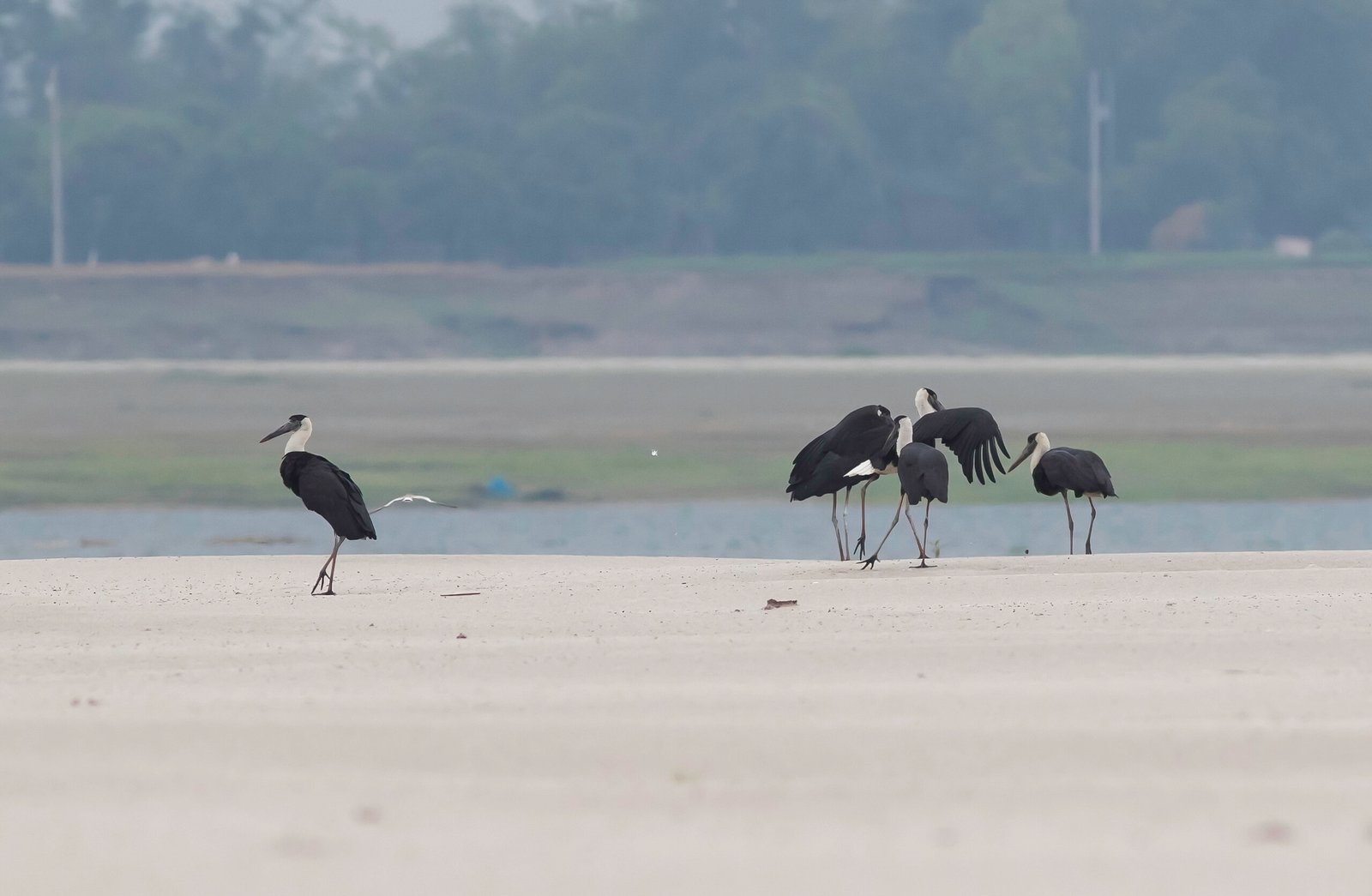
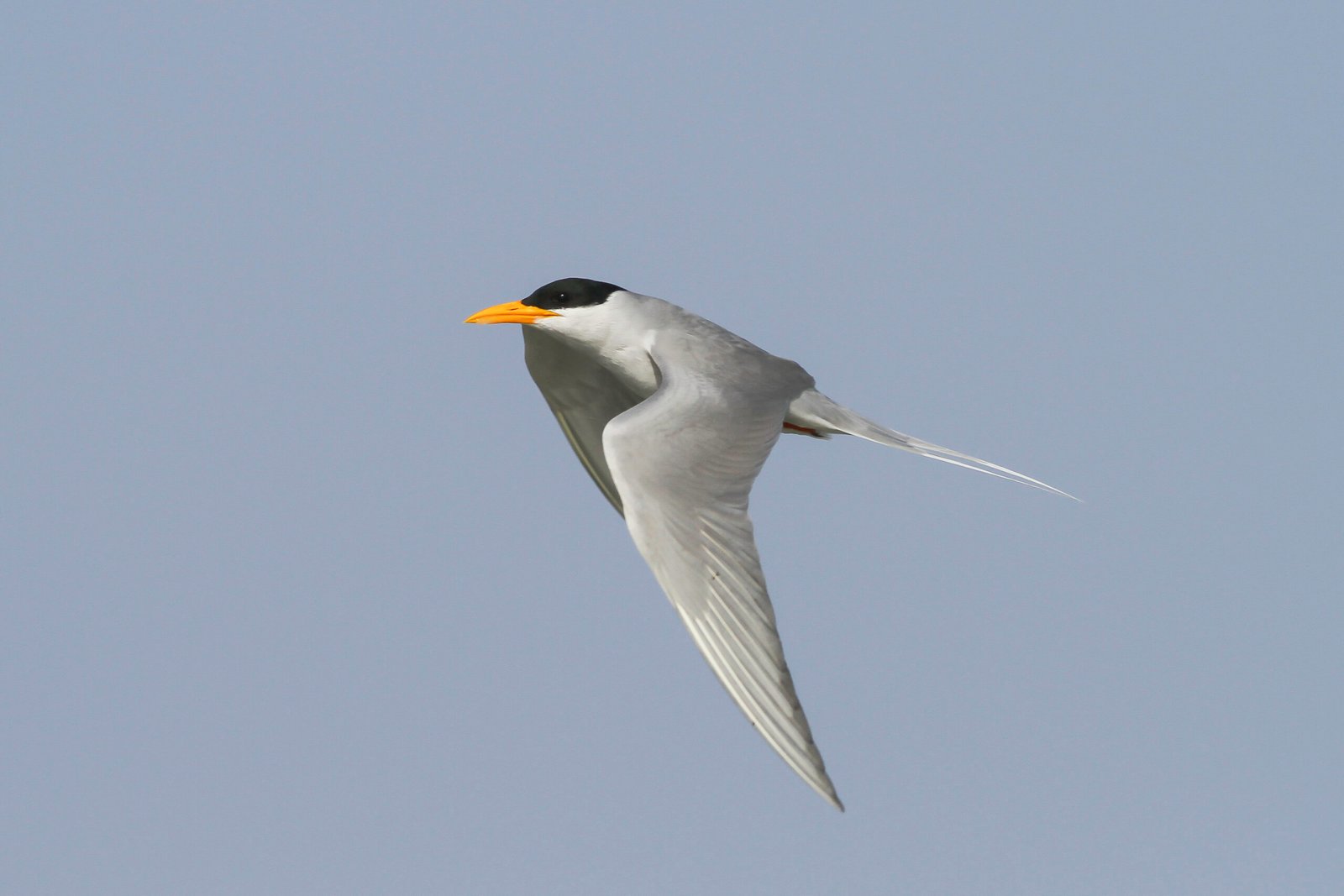
The project has identified previously under-recognised riverine breeding sites and grassland strongholds supporting globally threatened species. It has generated the scientific evidence necessary to advocate for legal protection of priority riverine landscapes. The work strengthens national recognition of river channels, sandbars and floodplain grasslands as critical ecosystems and contributes to expanding Bangladesh’s protected area network to include dynamic river systems.
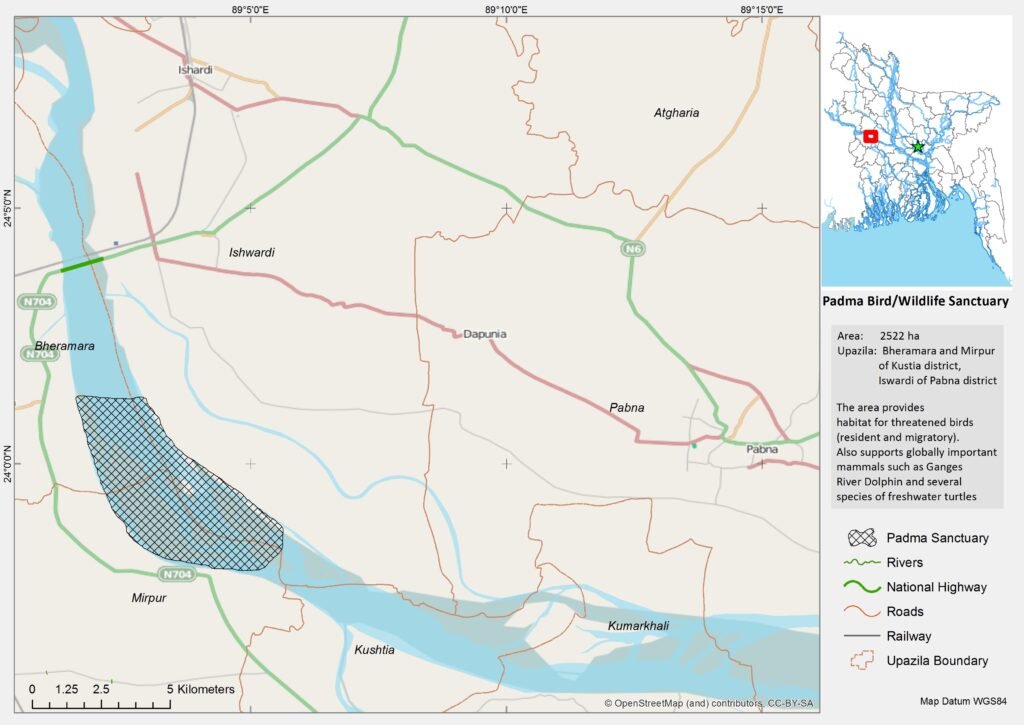
Proposed protected area (2522 ha) boundary along Padma River
The proposed riverine landscapes meet key criteria for protected area recognition due to their concentration of priority species and their ecological uniqueness. Surveys have documented breeding populations of resident waterbirds and substantial grassland-dependent bird populations within spatially definable riverine units. These habitats are seasonally predictable and ecologically connected, allowing for feasible boundary demarcation and site-based management. Incorporating these dynamic riverine ecosystems into the protected area framework would address an important ecological gap in Bangladesh’s conservation network and ensure long-term protection of both aquatic and grassland biodiversity.
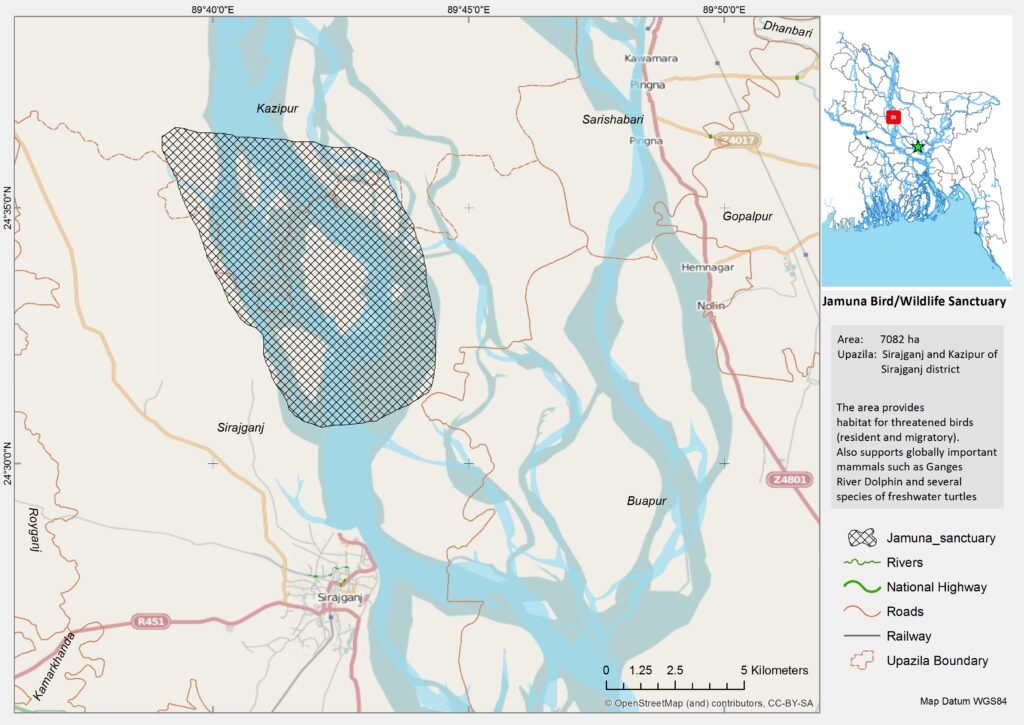
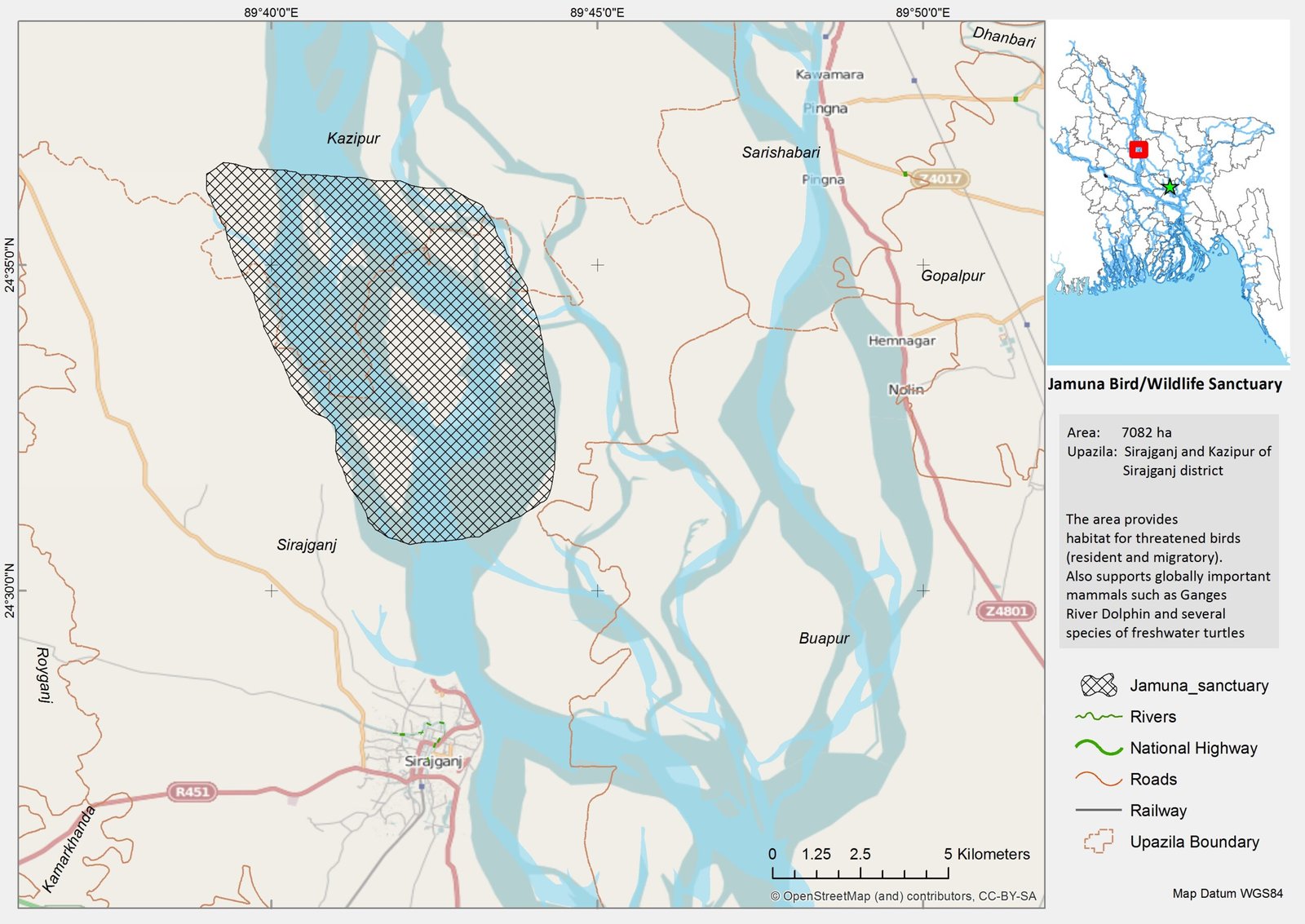
Proposed protected area (7082 ha) boundary along Jamuna River
Publications
𓅣 Population status, habitat preference and distribution of Bristled Grassbird Chaetornis striata in Bangladesh | Bird Conservation International 33 (2023): e27.v
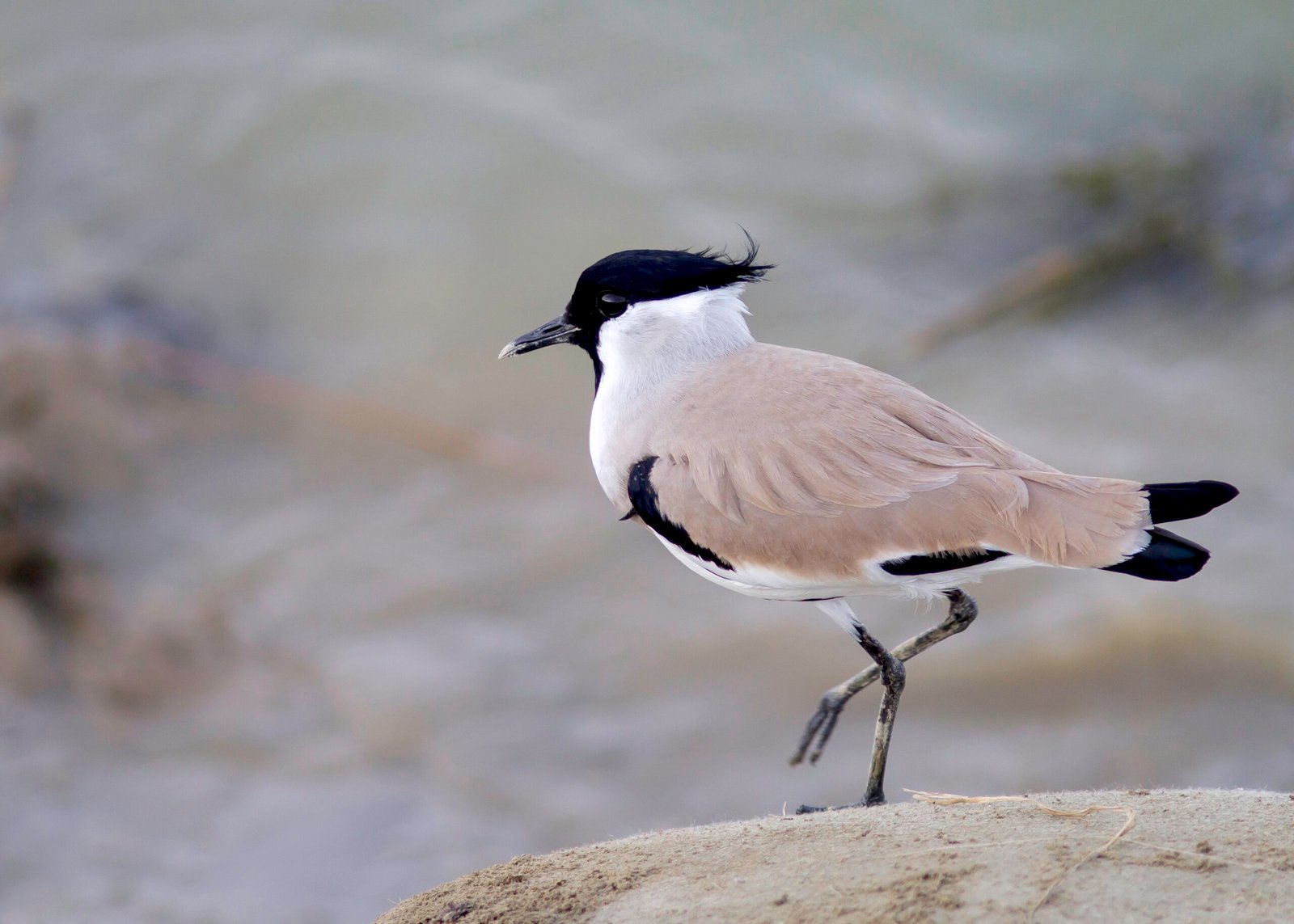
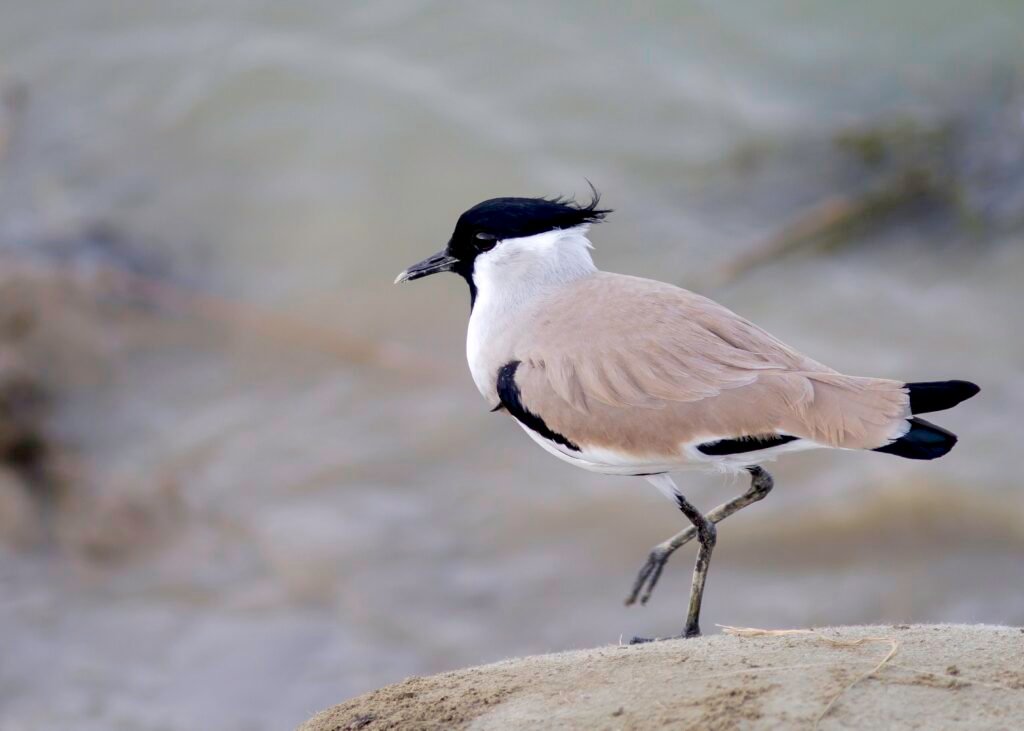
𓅣 Surveys of River Lapwings Vanellus duvaucelii in Bangladesh and observations on their nesting ecology | Wader Study 125 (2018): 90–96.
𓅣 A survey for Black-bellied Tern Sterna acuticauda and other riverine birds on the Jamuna and Padma rivers in Bangladesh | Forktail 30 (2014): 84–89.