The Meghna Estuary continues to demonstrate its national and international importance for migratory and wintering waterbirds. During the January 2026 survey, a total of 47,157 waterbirds representing 63 species were recorded across 53 sites, confirming the estuary’s significance as one of Bangladesh’s most important coastal wetland systems for waterbirds.
The most abundant species recorded during the survey were Eurasian Wigeon with 6,012 individuals, Black-tailed Godwit with 4,434, and Lesser Sand Plover with 3,962. These results reflect the importance of the Meghna Estuary for a wide range of migratory and resident waterbirds that depend on its mudflats, chars, saltmarshes and associated coastal habitats during the wintering period.
The survey also identified a small number of sites supporting particularly high concentrations of waterbirds. Char Ataur near Manpura held 6,479 waterbirds, the highest count recorded during the survey. Jaijjar Char near Bhasan Char supported 5,814 individuals, while Andar Char held 4,987. Together, these sites accounted for a substantial proportion of the total count and highlight the importance of a relatively small number of key locations within the wider estuarine landscape.
“Our findings suggest that while waterbirds are distributed across a broad network of habitats within the Meghna Estuary, certain sites consistently support especially high abundance and species diversity. Continued identification, monitoring and conservation of these priority sites will be essential for safeguarding the estuary’s ecological value.”
The 2026 results also provide an important comparison with the January 2025 survey, which recorded approximately 46,015 waterbirds of 62 species across 48 sites. The slightly higher total in 2026 likely reflects both increased survey coverage and natural annual variation in waterbird numbers. Nonetheless, the consistency between the two years reinforces the Meghna Estuary’s role as a major wintering ground for thousands of waterbirds.
At the same time, the survey highlights emerging threats to the estuary’s habitats. One of the most notable recent concerns is the expansion of watermelon cultivation in the upper part of the delta, where intertidal saltmarshes are being converted for seasonal agriculture through the construction of temporary embankments. This process alters natural coastal habitats and may reduce the availability of important areas used by waterbirds if it continues to expand.
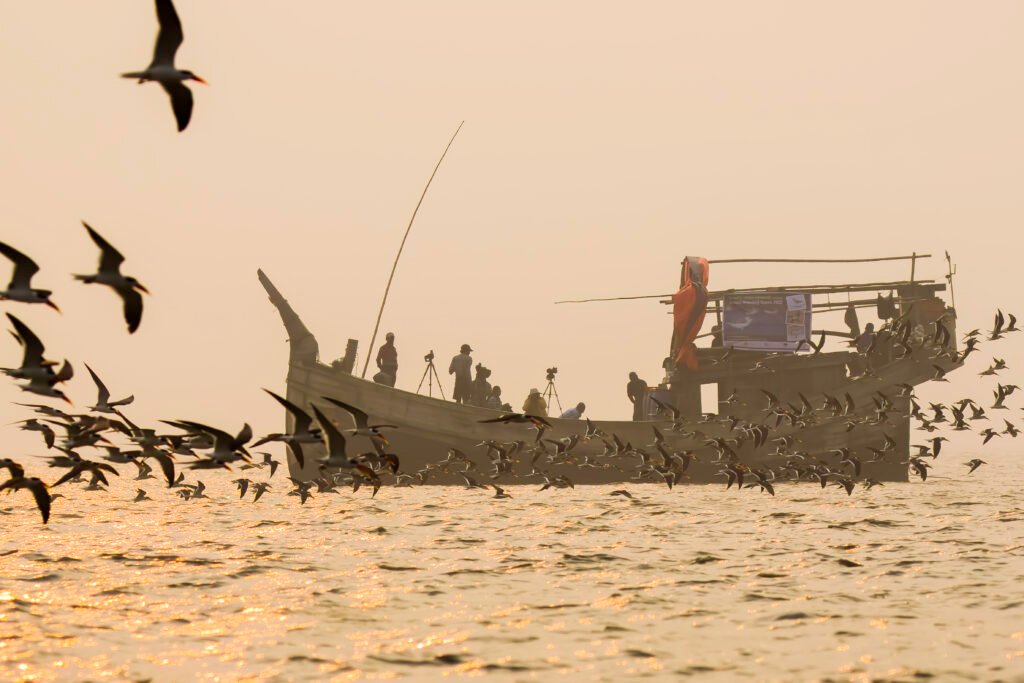
The Meghna Estuary is one of the largest and most dynamic coastal systems in Bangladesh, supporting extensive intertidal mudflats, chars, saltmarshes and shallow coastal waters. These habitats provide critical feeding and roosting areas for large numbers of birds each winter. Regular monitoring is therefore essential not only for documenting population trends and site use, but also for identifying new threats and informing conservation planning.
SCOPE Foundation remains committed to supporting research, monitoring and conservation action in the Meghna Estuary and other key wetland landscapes in Bangladesh. Continued survey efforts will be crucial for improving understanding of long-term changes in waterbird populations and for ensuring that the estuary’s most important habitats receive the protection and management attention they require.
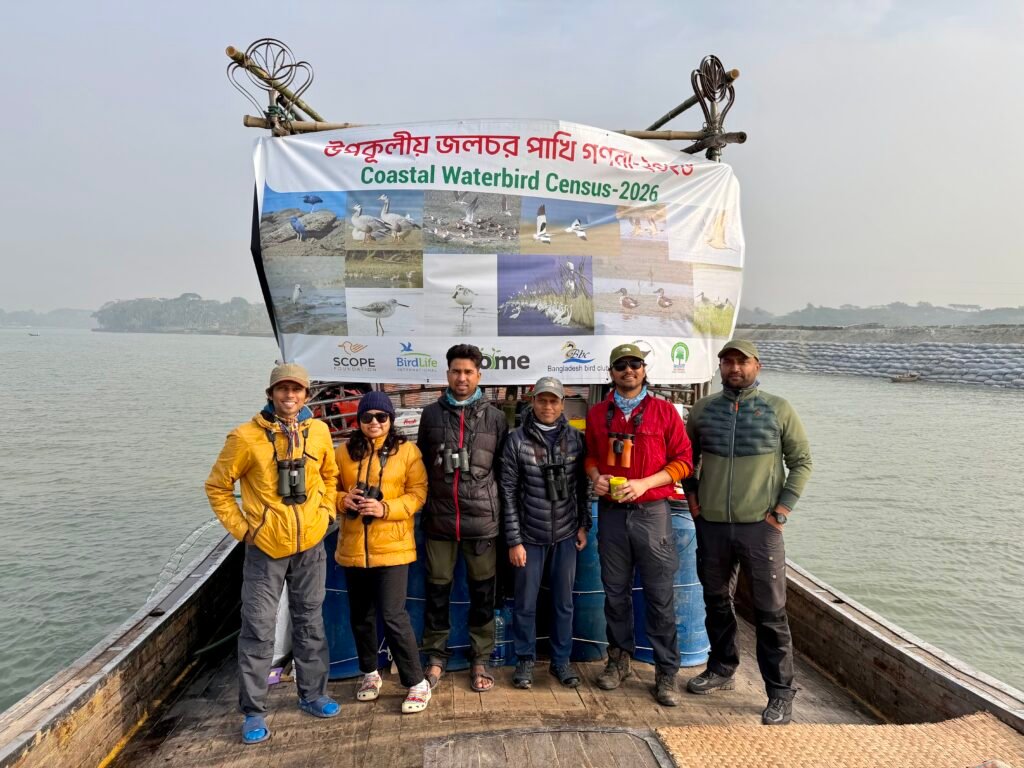
The January 2026 survey was conducted collaboratively by the Bangladesh bird club, SCOPE Foundation and BirdLife International.