
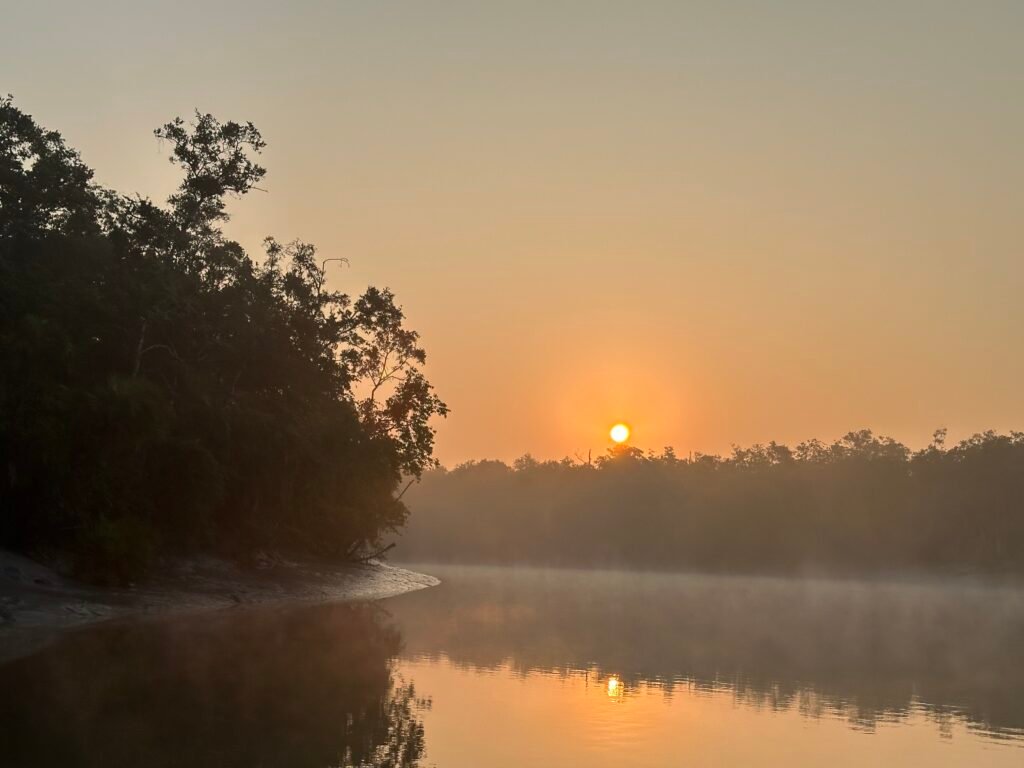
The Bangladesh Sundarbans (6,017 km2) is part of the largest single block of halophytic mangrove forest in the world, and parts of it are listed as a Ramsar and UNESCO World Heritage Site. The Sundarbans supports globally important populations of threatened species such as the White-rumped Vulture, Masked Finfoot, Brown‑winged Kingfisher and Mangrove Pitta. It supports around 300 species of birds including at least 28 globally threatened species. It holds the only known resident breeding population of the Critically Endangered Masked Finfoot, many important mammals including the Bengal Tiger — making it globally irreplaceable. Beyond biodiversity, the Bangladesh Sundarbans has important socio-economic value. More than 3.5 million people are directly or indirectly dependent on the ecosystem services of the Sundarbans.
A conservative estimate indicated the value of the Bangladesh Sundarbans’ ecosystem services to be between US$500 and US$1,200 per hectare per year. The Bangladesh Forest Department’s records show that in the fiscal year 2011–2012, 4,800 tons of fish, 165 tons of honey, 1,600 tons of firewood and 82,700 tons of nipa palm were harvested and 183,600 tourists visited the Bangladesh Sundarbans.
At SCOPE, we monitor the Masked Finfoot and avifauna across ecological zones, assess threats, and work with communities and government to safeguard this unique ecosystem.