Cold morning air circled around my face as I looked away into the pains where countrymen were out on their fields – some plowing, some irrigating, some just standing with their hands clasped against their back. The road that we took one winter morning ran through seasonal wetlands and agricultural fields. Water on shallow and slender ditches gleamed in the light of the morning.
A Brahminy Kite encircled the paddy field spreading its rufous wings, while Pond Herons and Cormorants stood still along the water edge and Drongos remained perched on solitary poles waiting for insects. The day starts early for women and children as well – kids gather around the edge of their houses to bask in the morning sun, while women visited ‘Pukur Ghats’ to fetch water for the day. Hundreds of cattle were grazing around the dry area of the Haor Basin.
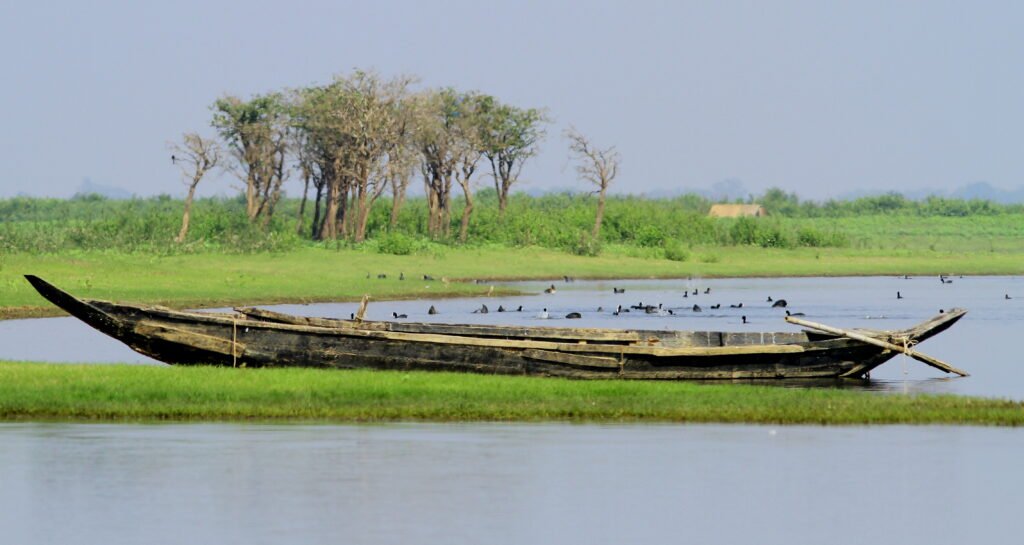
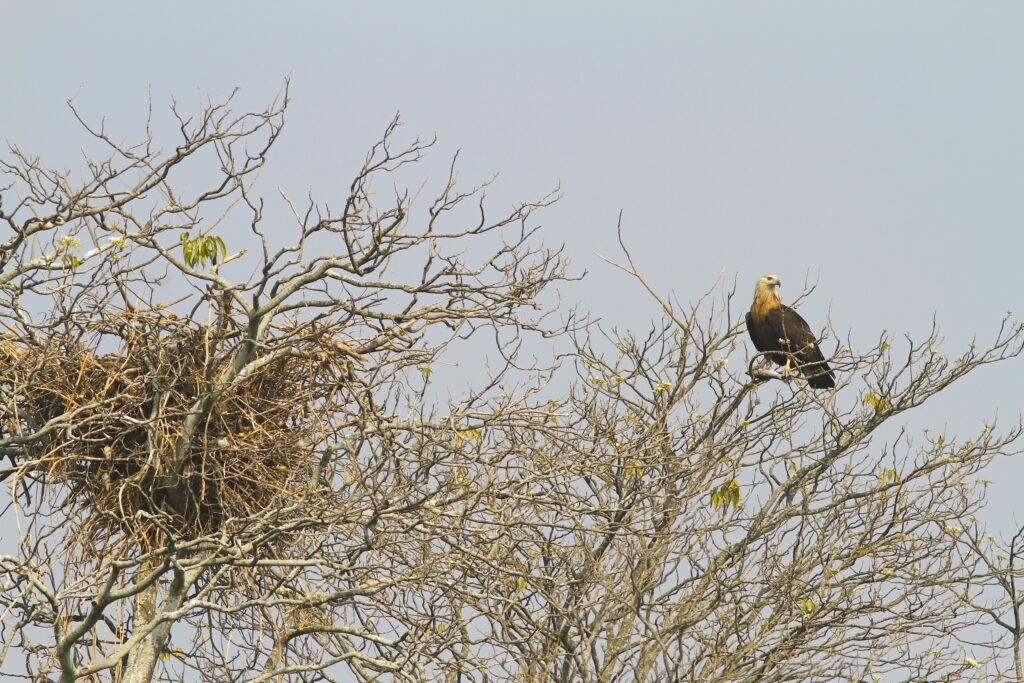
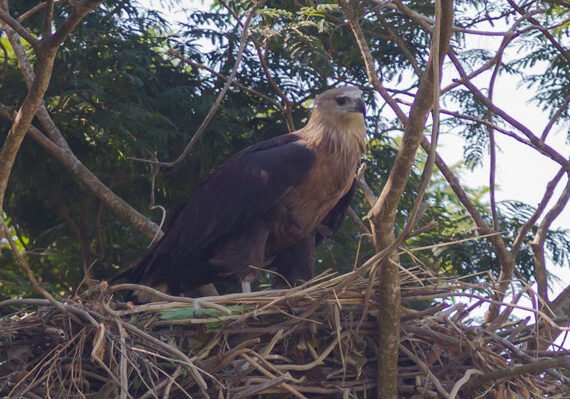
We were spending dawn to dusk at Sunamganj district, hopping from one village to another, one Haor to another, looking for a creature that visited this rich land for hundreds of years to build nest and to produce offspring. Our days were fascinating in the plains where Hason Raja fell in despair and rose in love with the landscapes, where water controlled life more than any other element of nature. We visited a minimum of 40 villages to find the mighty Pallas’s Fish Eagle and its nests.
This dark-brown eagle is very large, almost as large as a domestic goose! As the name indicates, it mainly eats freshwater fish and is largely dependent on our Haors. Increased population pressure of Bangladesh has resulted in the conversion of natural wetlands into agricultural lands, commercial fisheries, encroachment. The area is under constant change as many other human activities have created an immense pressure on resources available to native biota. A victim of this environmental degradation is the Pallas’s Fish-eagle and is now considered as globally Endangered. This breeding visitor was quite common in our country, especially in the freshwater areas and along the major rivers with regular nesting records. However, to date this species has become a rarity and scientists know only a few nesting sites.
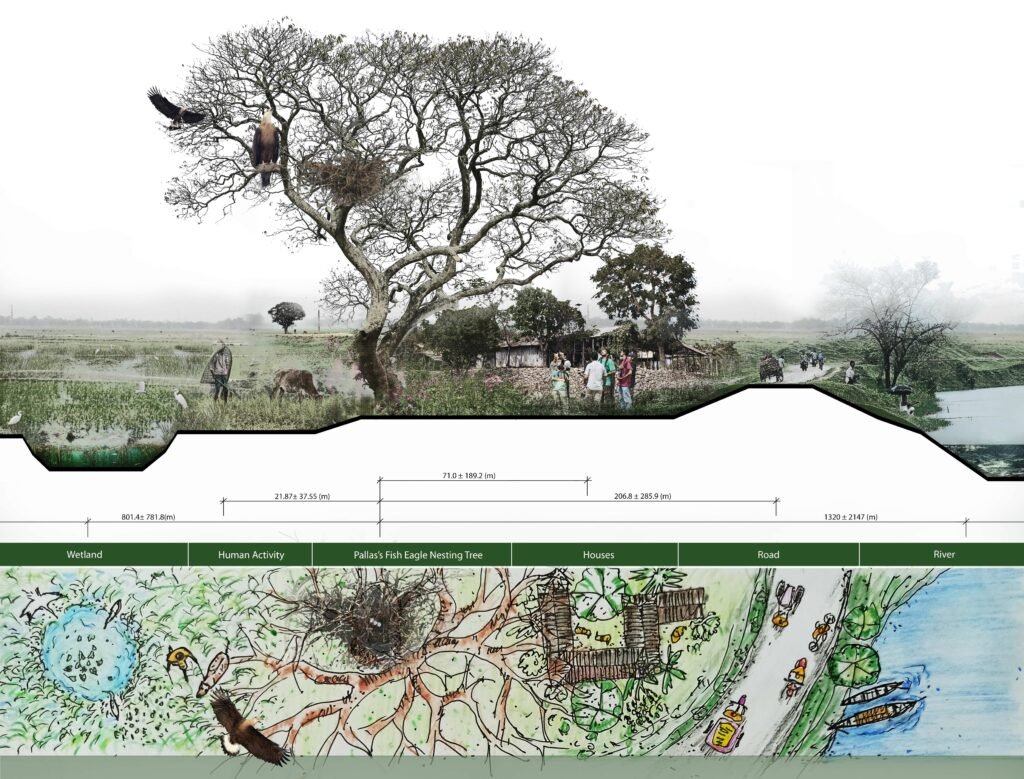
The near holy reputation and the cultural values with which this eagle was held by the villagers, helped us to find nests, at least one new nest almost everyday and we ended up finding 12 nests near Sunamganj city alone! The locals say that the eagle nests in the villages where good people live and avoid those that hold the greedy ones. Surprisingly, when we conducted interviews, villages with people who assumed that we were looking for the eagles to shoot it, hunt it or sell it to the black market didn’t support any nest!
Hason Ali, a village elder shared a fascinating story between the Pallas’s Fish Eagle and local people. He said when technology didn’t reach this land; the unique call of the eagles used to tell them about hours after dark and woke up locals who wanted to pray post-midnight. He said the eagle was attuned to their biological clock.
I write this piece with the sheer emotion that I have seen in the eyes of the people while they spoke about their days in this harsh condition, seasons of drought and flood, and the relationship between the eagle, them and their forefathers. Perhaps one day the eagle will die in the hearts of these people if we continue to ignore life beyond us. Will the locals ever remorse, I wonder, if the Pallas’s Fish Eagle goes extinct?