The night Cyclone Bulbul arrived in November 2019, the Sundarbans felt alive in a way that was both thrilling and unsettling. The wind rose steadily after sunset. The river, usually calm and tidal, turned restless. Waves slapped against the wooden hull of our boat as the storm gathered strength. We were anchored deep inside the mangrove forest, and although we were sheltered from the worst of the wind, the force of the cyclone was impossible to ignore. Floating inside the Sundarbans during a tropical cyclone is something you never forget. Part fear, part fascination.
Our survival that night owed everything to the skill and calm of our boat crew, led by Rubaiyat Mansur. By dawn the storm had passed. The sky cleared as if nothing had happened, and our boat slowly began moving north along the tidal channels.
But my attention was no longer on the mangroves. It was on the sky. Storms sometimes bring unexpected visitors. Powerful winds can push pelagic birds, species that spend most of their lives far out at sea — far inland. These birds normally roam the open ocean and rarely approach land except during the breeding season. When strong cyclones sweep across the Bay of Bengal, they can carry these ocean wanderers hundreds of kilometres away from their natural habitat.
That morning after Cyclone Bulbul, I watched every bird carefully. Brown-headed Gulls passed overhead. A few Whiskered Terns skimmed the water. But nothing unusual appeared. For birdwatchers in Bangladesh, pelagic birds are among the most mysterious creatures imaginable. They belong to the open ocean – far beyond the horizon and most of us never see them. Then came Cyclone Amphan.
When the ocean appears inland
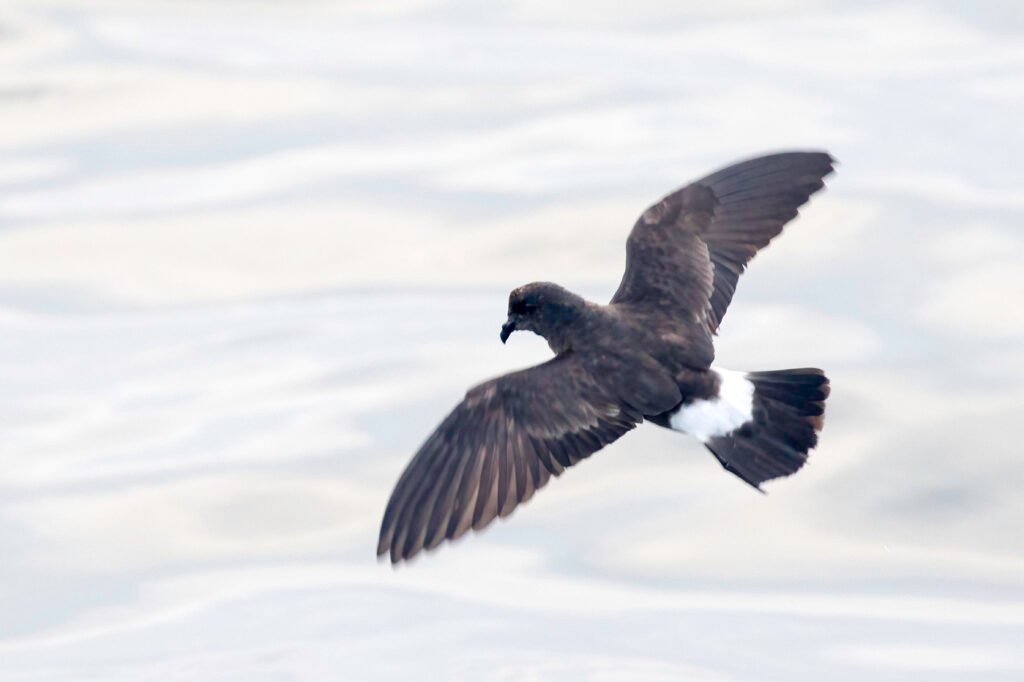
In May 2020, Cyclone Amphan formed over the Bay of Bengal and swept across eastern India and Bangladesh. When the storm passed, birdwatchers began reporting something extraordinary. Pelagic birds — species that normally live far out at sea, were suddenly appearing along inland rivers. Some were seen along the Padma River in Rajshahi, hundreds of kilometres from the coast. Others were reported near Dhaka. One even appeared flying above the city itself. Within a few days, birdwatchers documented several species never before recorded in Bangladesh. These included Sooty Tern, Bridled Tern, Wilson’s Storm-petrel, Wedge-tailed Shearwater, Long-tailed Jaeger and Jouanin’s Petrel. Some of these birds appeared as far as 300–340 kilometres inland from the open sea. For Bangladesh’s birding community, this was astonishing.
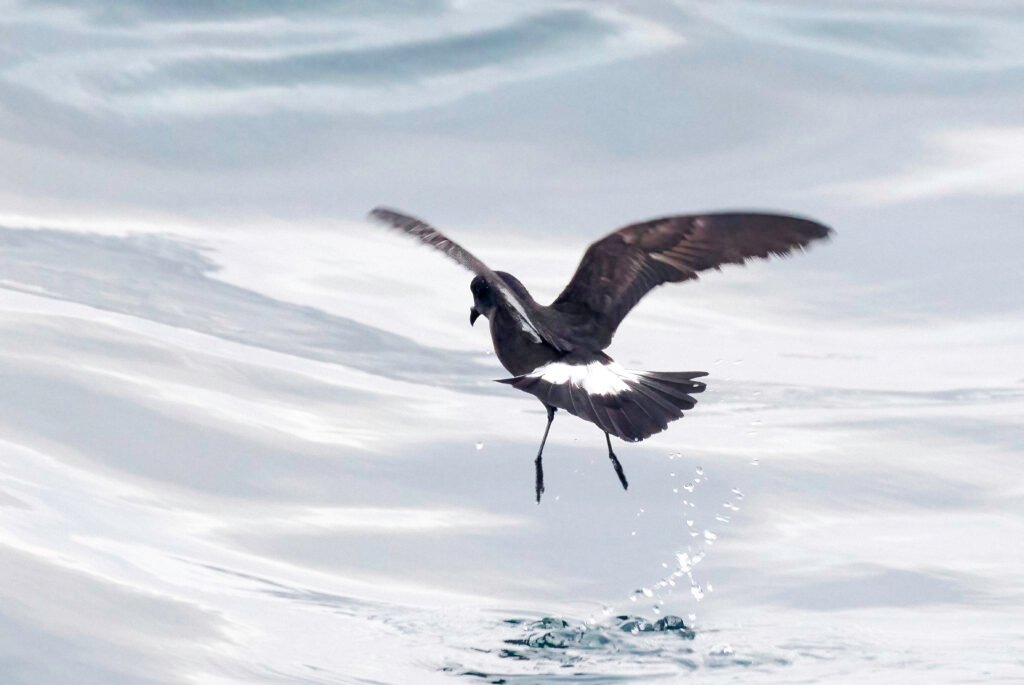
Wilson’s Storm-petrel [photo: Sayam U. Chowdhury]
How cyclones move seabirds across landscapes
Pelagic birds are among the most powerful fliers in the natural world. They are adapted to life above the open ocean, travelling enormous distances while searching for food. But storms can disrupt even the most skilled ocean travellers. Strong cyclonic winds can displace birds far from their usual habitats. Some are blown inland as the storm moves across land, while others struggle to navigate unfamiliar landscapes once the storm passes.
In recent decades, tropical cyclones in the Bay of Bengal appear to have become more intense and longer lasting. As these storms grow stronger, their ecological effects on wildlife including seabirds that are becoming increasingly visible. Different cyclones can also have different effects on birds. Cyclone Amphan displaced a particularly large number of individuals and species, while later storms such as Cyclone Yaas and Cyclone Remal brought different combinations of pelagic birds inland, especially rivers.
Why rivers become refuge
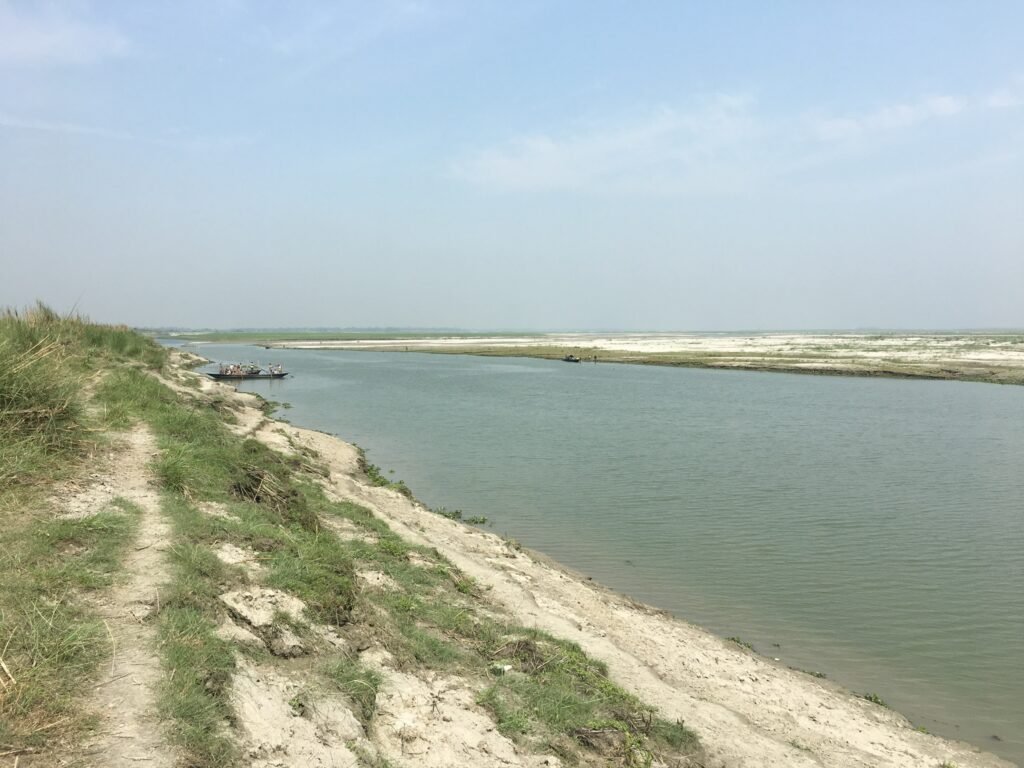
One striking pattern emerged from these observations. Nearly all inland sightings of pelagic birds in Bangladesh occurred along large river systems, especially the Padma. These rivers may provide temporary refuge for exhausted seabirds. For birds suddenly stranded far from the ocean, wide rivers offer open water where they can rest and sometimes find food before attempting to return to sea. This suggests that inland wetlands and major rivers may play an unexpected role in helping displaced ocean birds survive extreme weather events. Yet these river systems remain among the least protected ecosystems in Bangladesh.
The growing role of birdwatchers
Another remarkable aspect of these discoveries is how they were documented. Most of the records did not come from formal scientific surveys. Instead, they were reported by birdwatchers sharing photographs and observations through platforms like eBird and birding groups on social media. As birdwatching communities grow across Bangladesh, citizen science is becoming an increasingly powerful tool for understanding wildlife. Each unusual observation adds another piece to the puzzle of how birds respond to extreme weather events.
Storms in a changing climate
Cyclones have always shaped life around the Bay of Bengal. But climate change is likely increasing their intensity and duration. For pelagic birds, this may mean more frequent displacement events and perhaps greater risks. At the same time, these storms provide rare opportunities to observe ocean birds far from their usual world. Sometimes, after the winds die down and the skies clear, the most surprising stories are written in the sky above the rivers. A seabird from the open ocean, resting quietly hundreds of kilometres from home.