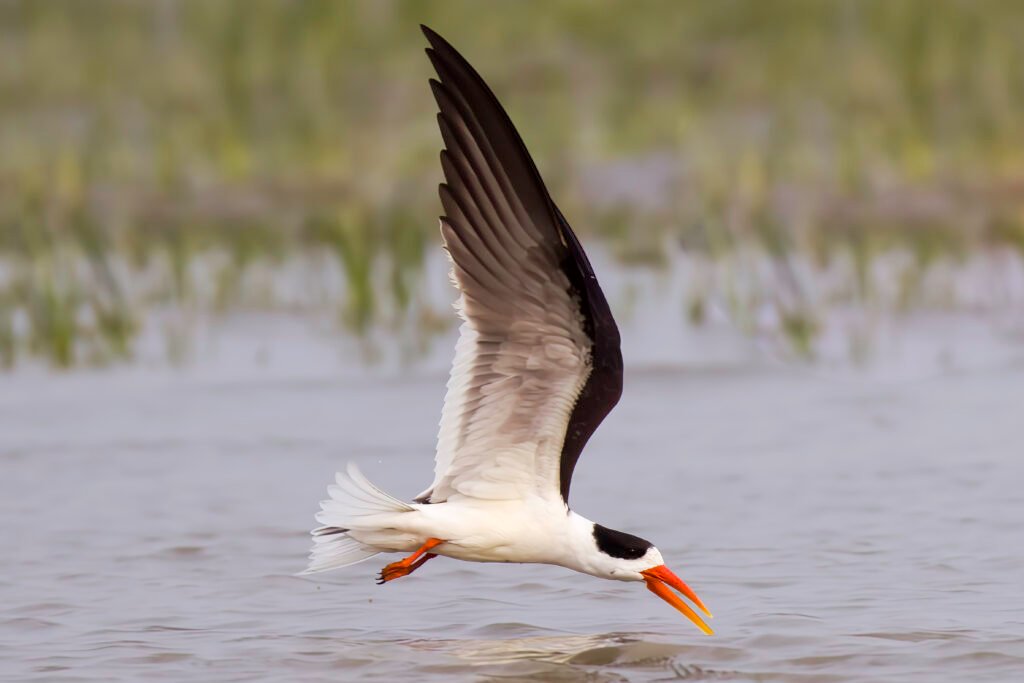
The sky hung low over Dhaka, wrapped in a winter smog that blurred the sun and pressed the city into silence. We boarded the overnight ferry at Sadarghat, escaping the choking haze in search of clearer skies and coastal wetlands where migratory birds still gather each winter. Climbing to the ferry’s roof as daylight faded, we scanned the Buriganga River, hoping for a glimpse of life along its edge.
Gulls and kites circled above, graceful scavengers floating through the gloom, feeding on whatever surfaced in the polluted water. The river below was a slow-moving grave, thick with sludge, choked by plastic and darkened to near black. Once Dhaka’s lifeline, the Buriganga was the city’s main water source when the Mughals made it their capital in 1610. I couldn’t help but wonder what, if anything, still lived in those depths. I couldn’t help but wonder what, if anything, still survived in those depths. It brought to mind the poisoned rivers of Mordor in Middle-earth, J.R.R. Tolkien’s shadowed realm in The Lord of the Rings, a land steeped in rot and ruin.
It was this very river, poisoned and forgotten, that carried us toward Hatia Island. There, nature still breathes. A place where winter winds smell of date palm jaggery, the fields yield harvests, and flocks of wild shorebirds descend each year in the thousands. We were chasing birds, but we were also chasing hope.
Disappearing wetlands
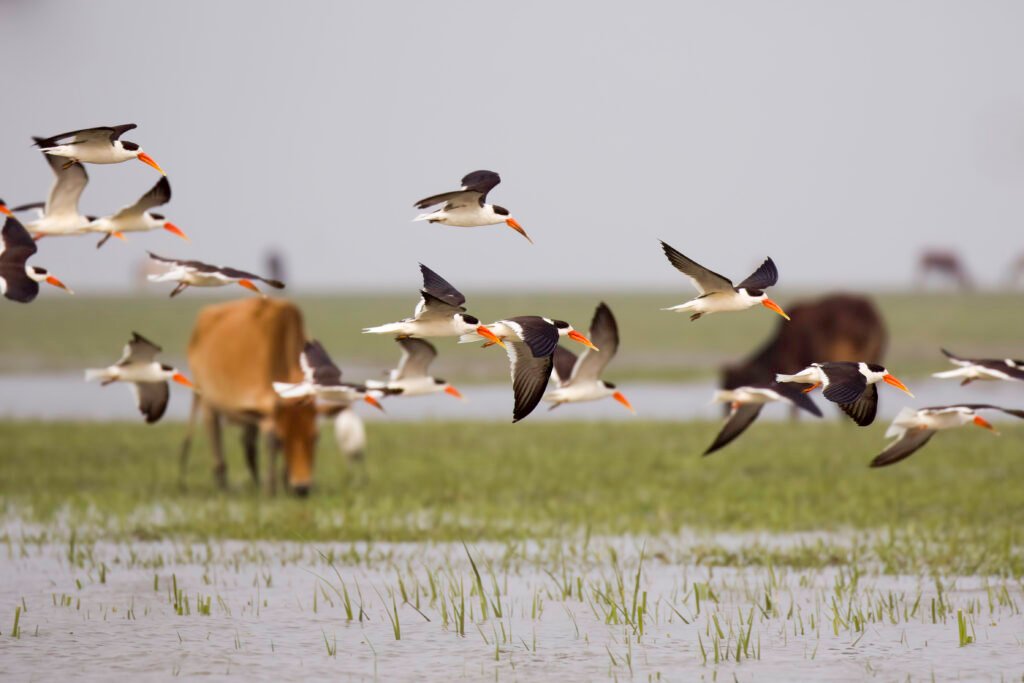
Wetlands, once the backbone of Bangladesh’s ecology and rural economy, are disappearing. From inland floodplains to coastal tidal flats, these ecosystems are being drained, paved over, or suffocated by pollution. In a country defined by water, the slow death of its wetlands is perhaps its least visible but most dangerous crisis.
The causes are familiar: unplanned development, agricultural expansion, shrimp farms, erosion, and overfishing. Yet despite supporting millions of livelihoods and acting as buffers against floods and climate shocks, wetlands remain an afterthought in national planning.
Among the most threatened are riverine floodplain grasslands. These dense grassy islands, emerging seasonally along the Padma and Jamuna rivers, support rare species like the Bristled Grassbird – thought extinct in Bangladesh until recently. Our research shows these habitats are rapidly being lost to cultivation and grazing, and are weakly protected. They may be some of the country’s richest ecosystems and also its most neglected.
Where life still clings to the tide
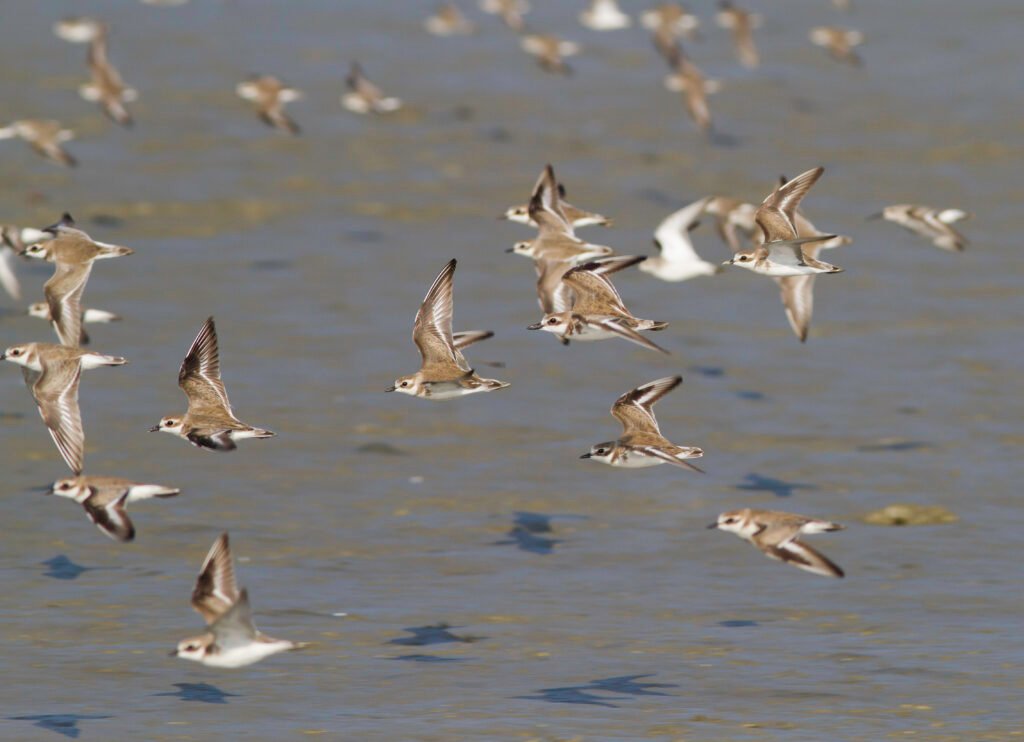
We arrived on Hatia Island at dawn, ready to explore the vast tidal flats where migratory shorebirds rest and feed. As the tide receded, the land transformed. Rippling sands met glistening mud, and the sky burned gold.
Thousands of birds swept in. Black-tailed Godwits probed the shallows, Curlews dug for crabs, and the Pied Avocet, a personal favourite – swept its upturned bill in elegant arcs through the mud.
These tidal wetlands are more than just beautiful. They are vital. Endangered species like the Spoon-billed Sandpiper depend on them to complete epic migratory journeys. When we lose these habitats, we are not just losing birds. We are dismantling the ecological rhythms that sustain us and them.
Degradation, pollution and coastal squeeze
While parts of the coast are now under marine protection, pressure is mounting. Tidal wetlands are being converted to shrimp farms, salt pans and rice fields. Tourist-heavy beaches like Cox’s Bazar are strewn with plastic waste. Rivers from inland cities act as conveyor belts, delivering this debris directly to sensitive coastal zones. Microplastics now lace the sand and water. Discarded fishing nets – “ghost gear”, silently drift through the water, entangling marine life.
Shorebirds are especially vulnerable. They migrate long distances and cluster along coastlines and estuaries, where plastics are often concentrated. Many species are now regularly exposed to plastic pollution in the very places they rely on.
There is also the creeping threat of coastal squeeze. As seas rise, wetlands and tidal flats should naturally move inland. But where their path is blocked by embankments, roads, and settlements, these habitats are slowly drowned, unable to retreat or regenerate.
Still, not all is lost. Many coastal wetlands remain intact and productive, supporting both wildlife and people. With the right protections, they could anchor Bangladesh’s coastal resilience.

What we risk, what we can save
This is not just about birds or scenic beauty. It is about resilience. Wetlands are Bangladesh’s first line of defence against floods, storm surges and rising seas. Their continued loss puts millions at risk.
It is time to place wetlands at the heart of national policy. That means recognizing the value of both river and coastal systems, safeguarding the ecosystems that still function, and treating plastic pollution not as litter but as an environmental security threat.
Tanguar Haor’s wetland ecosystems must be restored. Grabbed lands around Sonadia Island, now converted to salt farms, need to be recovered. Islands like Ganguirar Char, near Bhashan Char, deserve legal protection. And the few remaining riverine floodplain grasslands must be brought under management before they are lost entirely.
We came to Hatia searching for birds. What we found was a fragile future – still alive, still wild and still worth saving.